Microchips vs NFC Tags: Do You Need Both?
"My dog's already microchipped - why would I need a smart tag?"
We hear this one a lot, and it's a fair question. Microchipping is mandatory in most of Australia, so if your pet's already chipped, what's the point of adding more tech to the collar?
The short answer: microchips and NFC tags solve completely different problems. You need both. Here's why.
What microchips actually do
A microchip is a tiny transponder - about the size of a grain of rice - implanted under your pet's skin, usually between the shoulder blades. It stores a unique identification number. That's it. A number.
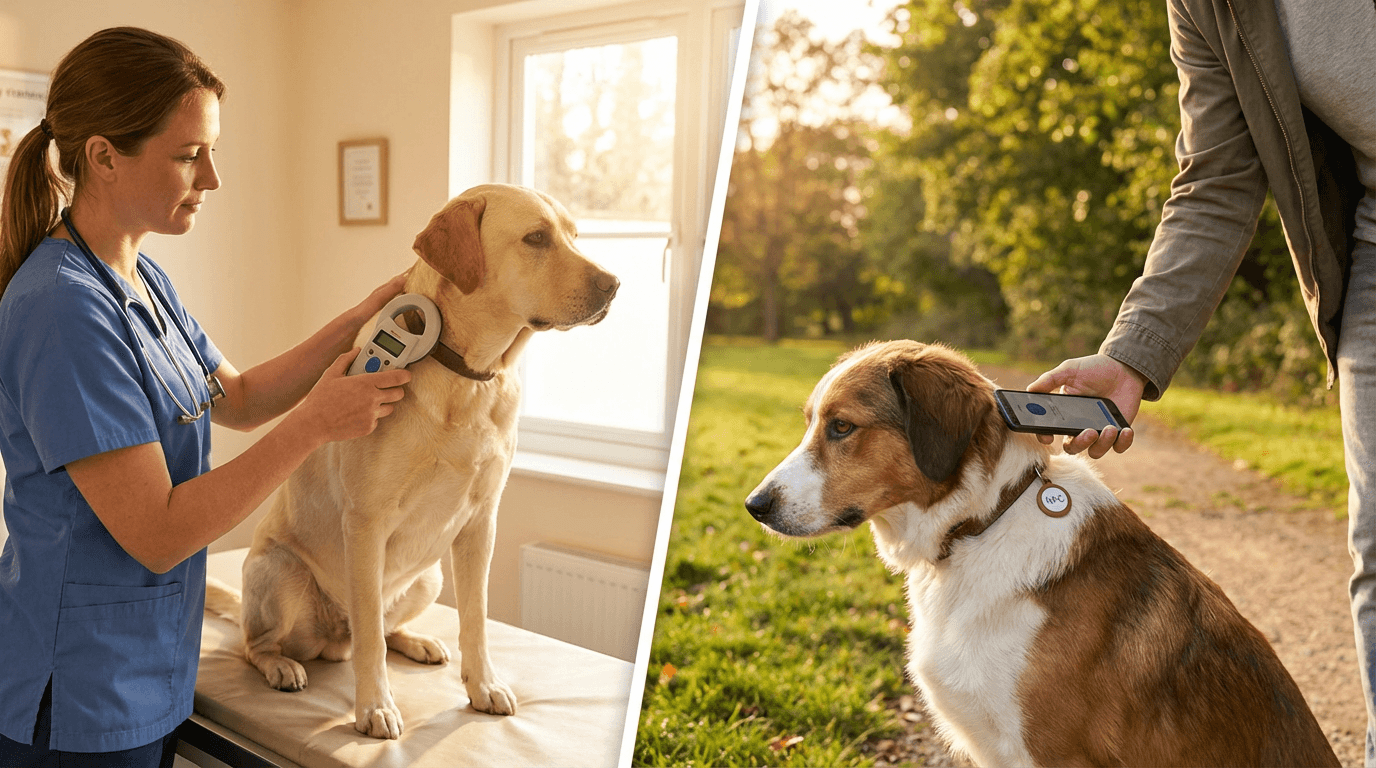
When a vet or shelter scans the chip with a specialised reader, they get that number. They then look it up in a national registry (like the Central Animal Records or your state's pet registry) to find the owner's contact details.
Microchips are brilliant at what they do:
- Permanent - they last the life of the animal. No batteries, no maintenance.
- Tamper-proof - they can't fall off, be removed by a stranger, or be lost.
- Standardised - vets and shelters across Australia (and internationally) can read them.
- Legally required - most Australian states mandate microchipping for dogs and cats.
If your pet ends up at a vet clinic or shelter, a microchip is the gold standard for proving ownership and getting them home through official channels.
What microchips DON'T do
Here's where the misconceptions start. Microchips are surrounded by myths, and those myths create a false sense of security.
They don't work for the general public
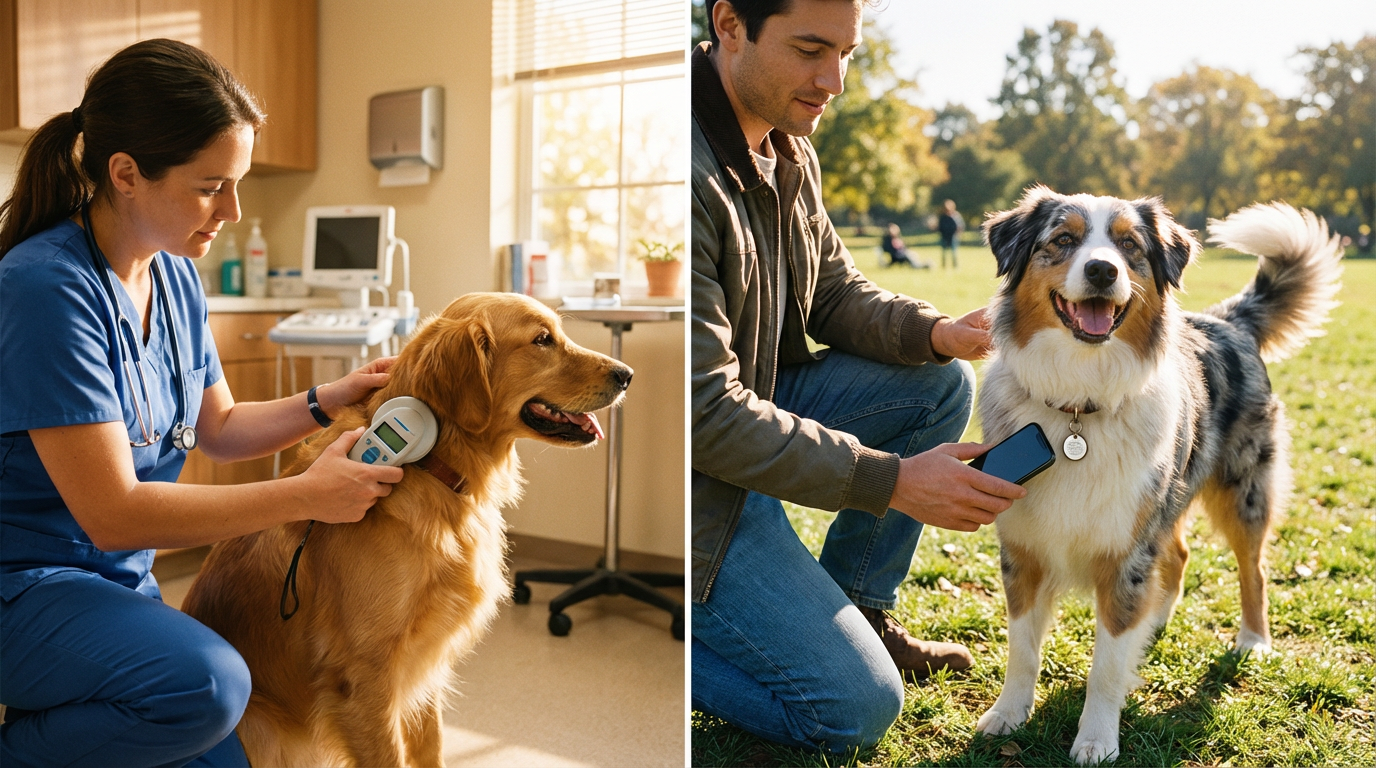
The person who finds your dog at the park, on the street, or in their front yard cannot scan a microchip. They don't have a scanner. Their phone can't read it. The chip requires a specialised reader that only vets, shelters, and council rangers carry.
So the most likely reunion scenario - a random person finding your pet and wanting to help - is the exact scenario where a microchip doesn't help at all. They're left squinting at a scratched engraved tag or simply guessing.
They're not GPS trackers
This is probably the biggest myth. Microchips do not track your pet's location. They don't broadcast a signal. They don't connect to your phone. They sit completely dormant until a scanner activates them at close range. If your pet is missing, the chip can't tell you where they are.
They're only as good as the registry data
A microchip links to a database entry, and that entry is only useful if it's current. Moved house? Changed your phone number? Got a new email? If you didn't update the registry, the chip effectively points to nobody.
A 2022 study by the Australian Veterinary Association found that a significant proportion of microchipped pets had out-of-date registry information. The chip works perfectly - it's the human side that fails.
When was the last time you checked your pet's microchip registration? If your phone number or address has changed since you registered, update it today. A chip with stale details is no better than no chip at all.
What NFC tags do
NFC (Near Field Communication) tags solve the exact problem that microchips leave open: what happens when a regular person finds your pet?
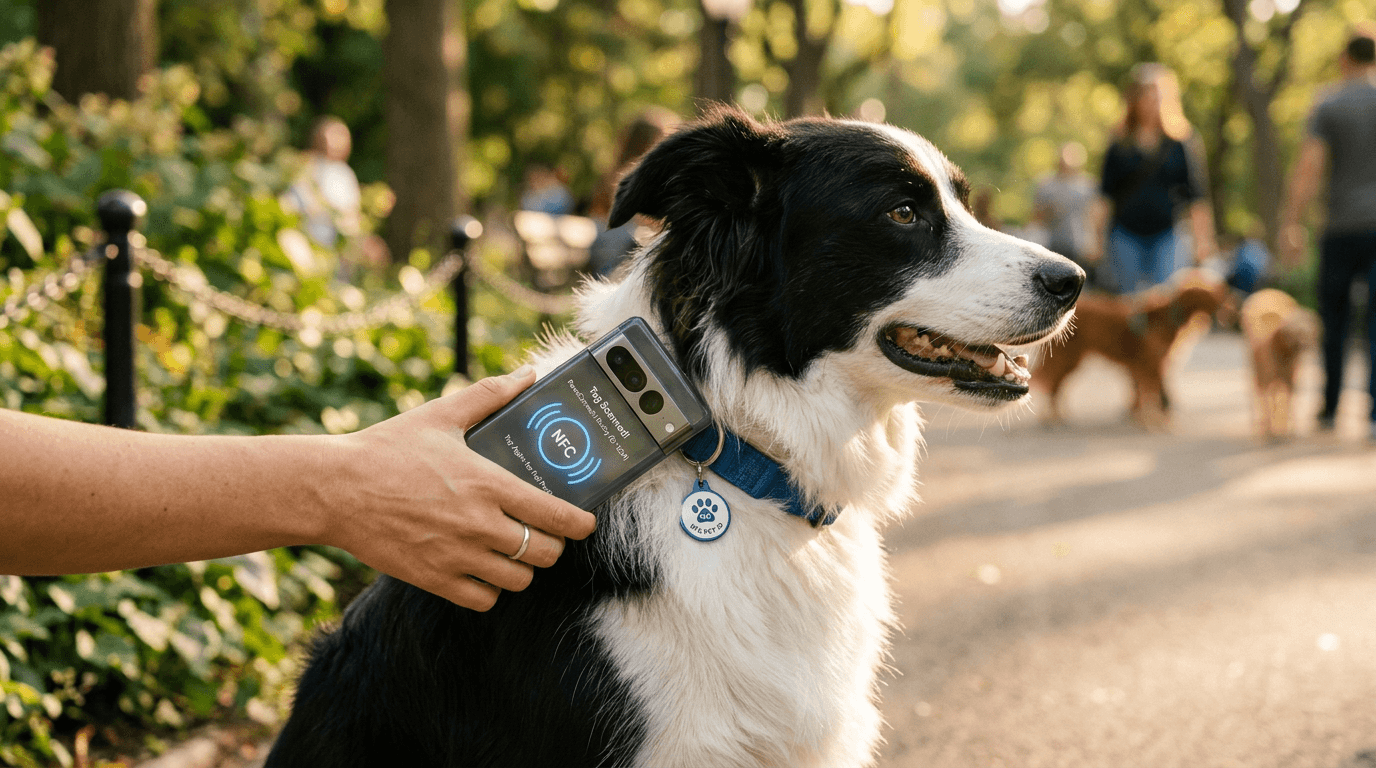
An NFC tag sits on your pet's collar. When someone holds their phone near it - any modern smartphone, no app required - it instantly opens your pet's digital profile. Name, photo, your contact details, a way to message you directly. The whole interaction takes about two seconds.
With FoundYa's platform, the finder sees a full profile in their browser. You get a push notification with their approximate location. If you've activated lost mode, your nearby Sentinels are already on alert. The connection between finder and owner happens in moments, not hours.
And if the finder has no mobile signal? FoundYa uses hybrid NFC - the chip stores a vCard directly on it, so the finder still gets your phone number and name even when fully offline. No internet required.
Why you need both
Think of it as belt and braces. Microchips and NFC tags cover different parts of the same problem - getting your pet home when they go missing.
| Scenario | Microchip | NFC Tag |
|---|---|---|
| Pet arrives at a vet or shelter | Scanned and matched to owner | Not typically checked |
| Random person finds pet at the park | Can't scan it | Tap, see profile, message owner |
| Pet found in area with no phone signal | Needs a scanner anyway | Hybrid NFC stores contact details offline |
| Owner moves and forgets to update details | Registry goes stale | Digital profile can be updated anytime |
| Collar comes off | Chip is still implanted | Tag is lost with the collar |
| Permanent identification for legal disputes | Yes - tamper-proof | No - it's on the collar |
They complement each other perfectly:
- Microchips handle the professional network - vets, shelters, council rangers. The official system.
- NFC tags handle the public - the neighbour, the jogger, the tradie, the kid who spots your dog in their schoolyard. The most common reunion scenario.
Roughly 60% of lost pets in Australia are returned by members of the public, not by vets or shelters. That's the gap NFC tags fill - making the most common reunion path as fast and frictionless as possible.
One covers permanent identification through official channels. The other covers instant identification by anyone with a phone. Remove either one and you've got a gap.
Common myths - let's clear them up
"My microchip has GPS." It doesn't. No microchip on the market tracks location. You might be thinking of GPS tracker collars, which are a separate product entirely (and require charging).
"NFC tags replace microchips." They don't, and we'd never suggest skipping a microchip. Tags live on collars, and collars can come off. A microchip is permanent. Both matter.
"My pet never goes outside, so they don't need a tag." Indoor pets escape. Doors get left open, screens get pushed out, visitors aren't as careful as you are. An indoor cat that escapes is often more disoriented and harder to find than an outdoor cat that wanders. A tag gives whoever finds them a way to reach you.
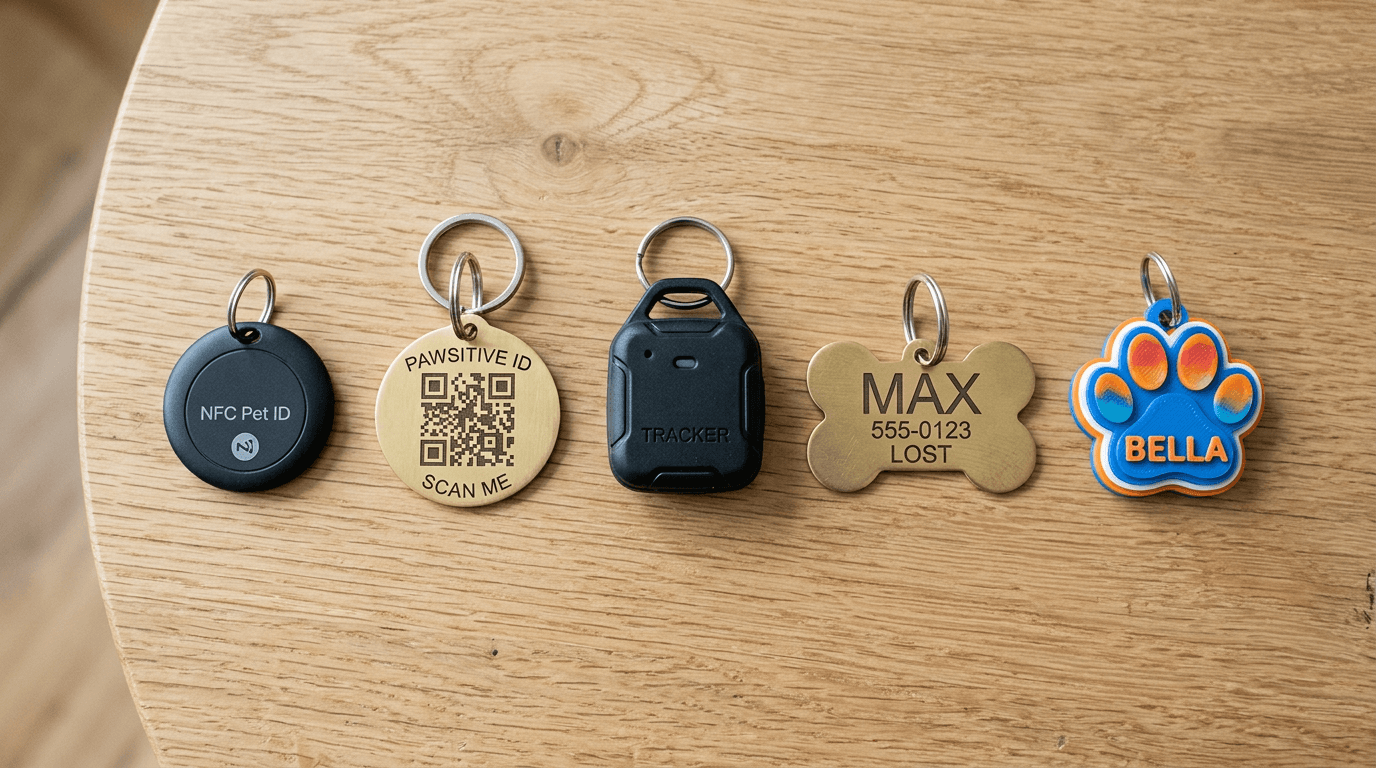
"I've got an engraved tag - that's enough." An engraved tag is better than nothing, absolutely. But the text scratches off over time, it can only hold a name and phone number, and if you change your number the tag is useless until you buy a new one. A digital profile stays current, holds as much information as you want, and gives the finder more tools to help.
"NFC tags need batteries / an app / the internet." None of the above. NFC chips are powered by the energy from the scanning phone - no battery, ever. The finder doesn't need an app. And with hybrid mode, even the internet is optional.
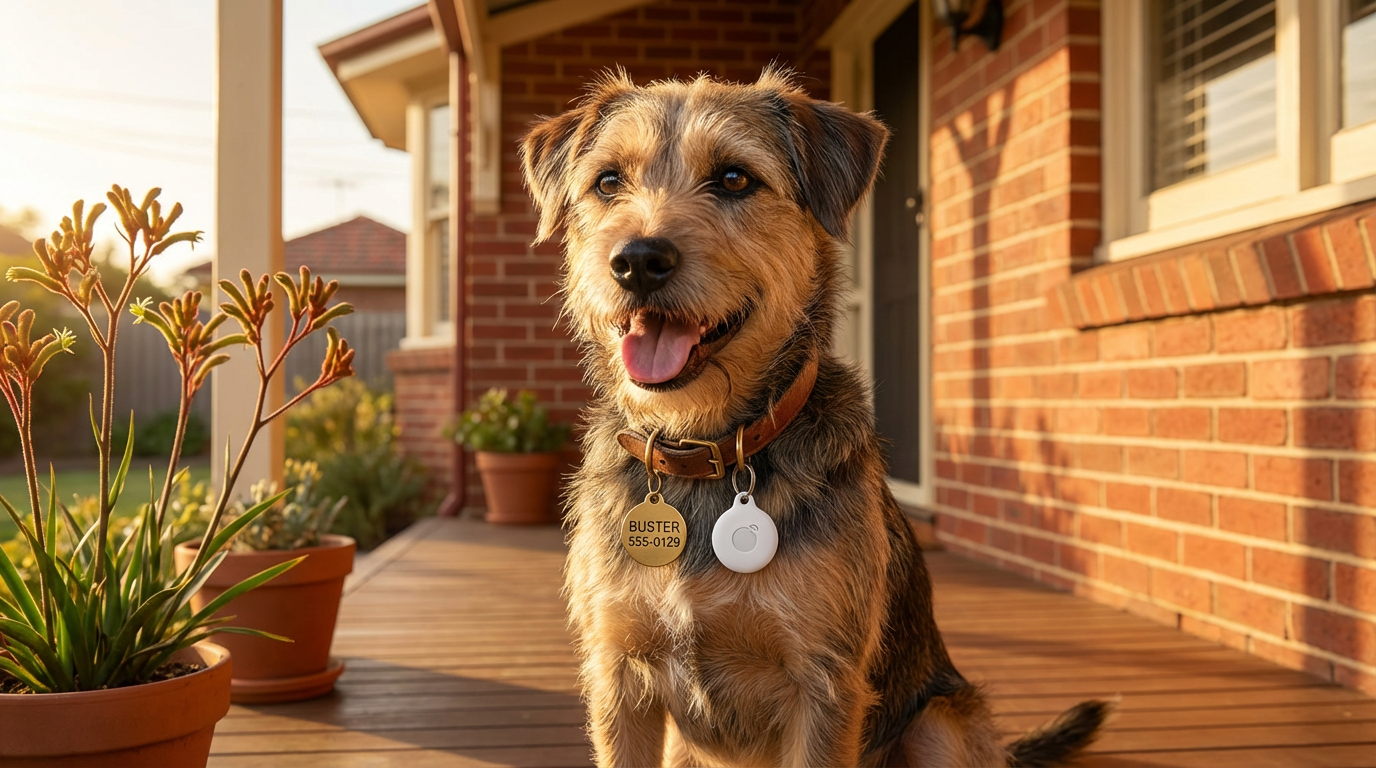
The real question isn't "which one" - it's "why not both?"
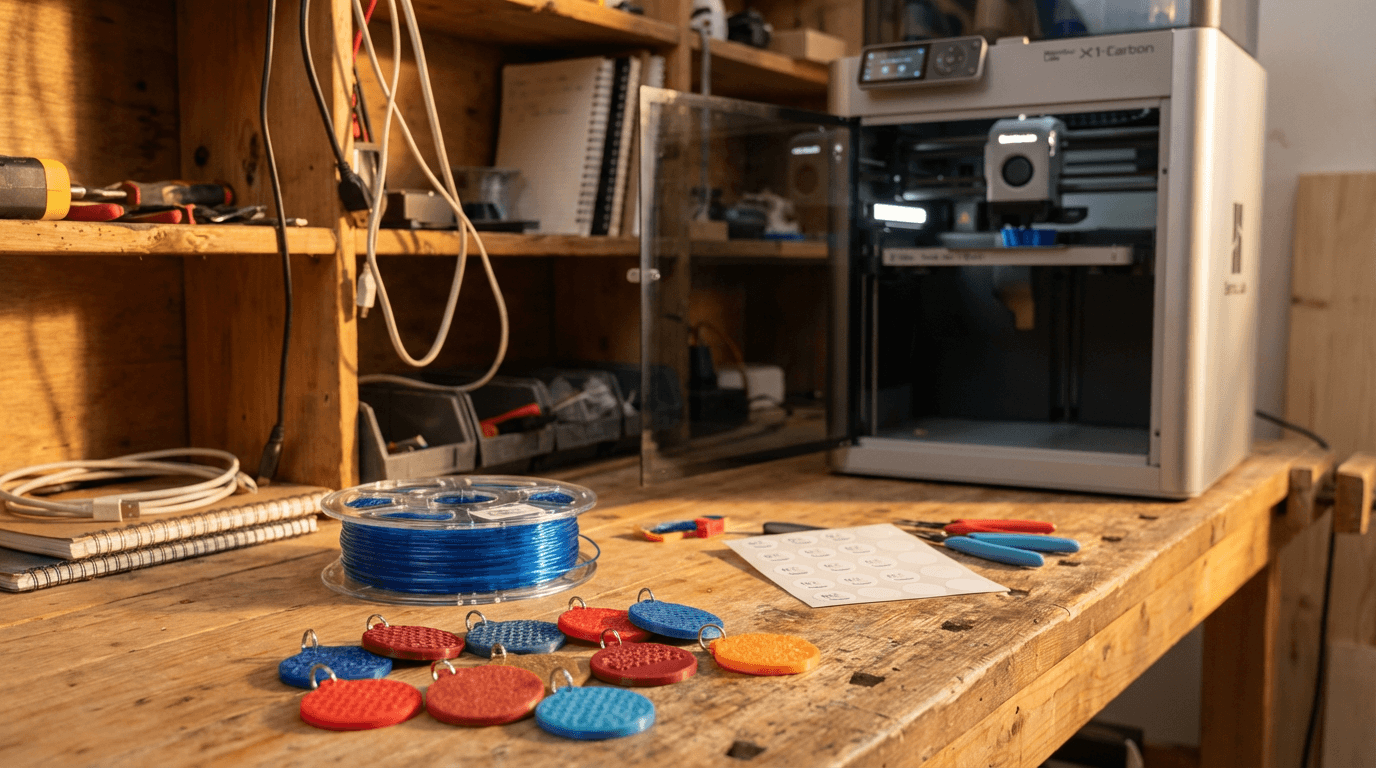
A microchip costs about $50-80 at implantation and you never think about it again. An NFC tag can be as cheap as a $2 sticker from an electronics shop - FoundYa works with any standard NFC chip, so you don't need to buy specific hardware. The platform is the product, not the tag.
For less than the cost of a bag of dog food, your pet has two independent identification systems covering every reunion scenario - the professional network and the general public, online and offline, permanent and updateable.
We reckon that's a pretty good deal.
Already have a microchip? Add your microchip number to your pet's FoundYa profile so everything is in one place. If a vet scans the chip, they'll find your registry details. If a person taps the tag, they'll see your profile. Every base covered.
Set up both in minutes
If your pet is already microchipped (and it probably is), you're halfway there. Head to the Tag Designer to see what a FoundYa tag looks like, or sign up and link any NFC chip to start building your pet's profile. You can have both systems running by the time you finish your coffee.
Already using FoundYa? Make sure your microchip registry details are current too - because the best safety net is one with no holes in it.