Smart Pet Tags in Australia 2026: What Are Your Options?
The days of a simple metal disc with your phone number stamped on it aren't over - but they're not the only option anymore. Smart pet tags have gone from niche gadget to genuinely useful tool, and in 2026 there are more choices available to Australian pet owners than ever.
The problem is figuring out what's actually worth your time and money. Some options are brilliant. Some are overpriced solutions looking for a problem. And some are cheap imports that technically work but leave you with a URL pointing to a generic form and not much else.
We're FoundYa, so we're obviously not unbiased here. But we've tried to be fair - and we genuinely think you should ask tough questions of every provider, including us.
Here's the lay of the land.
What smart tags actually do
Traditional engraved tags have one job: display a phone number and maybe a name. They work fine until the engraving wears down, the number changes, or you need to convey more than fits on a 25mm disc.
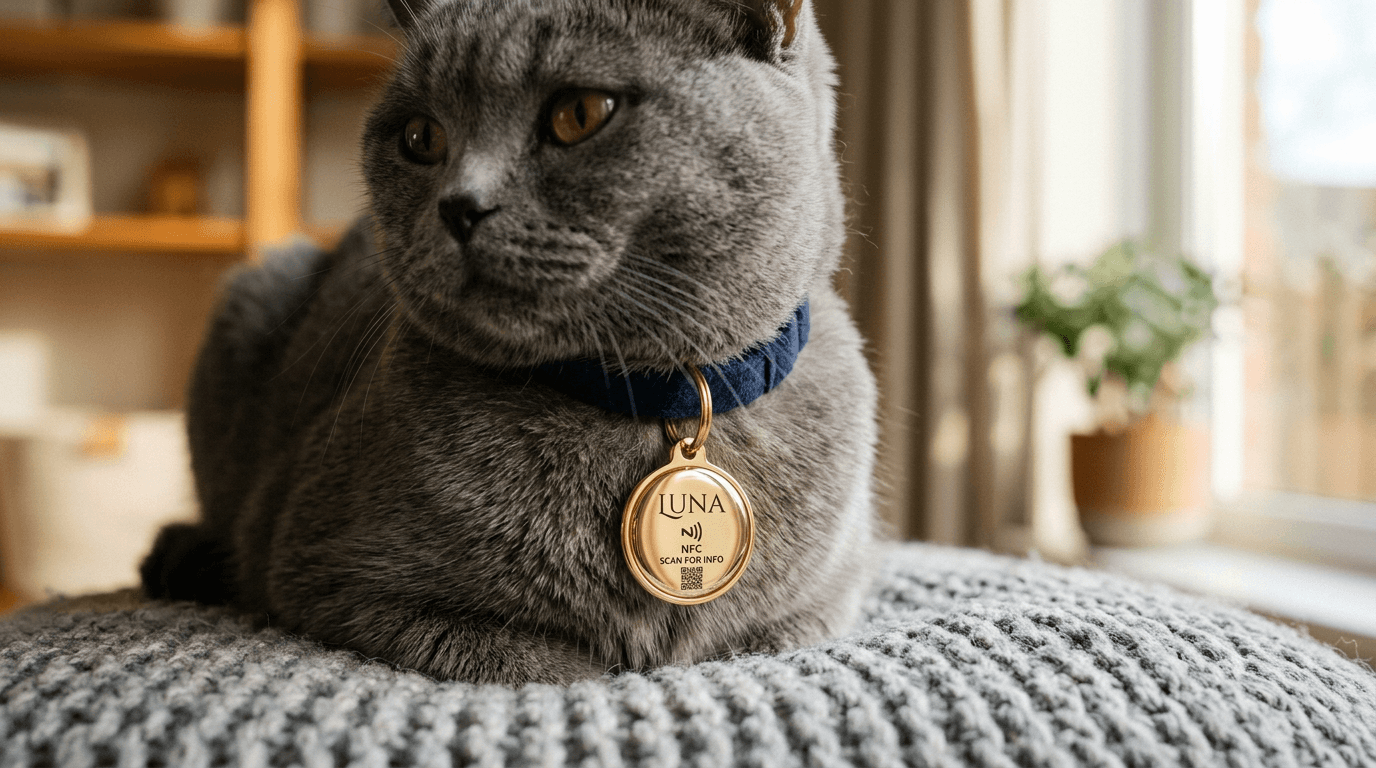
Smart tags connect to a digital profile. Instead of static text, a finder scans the tag (by tapping, scanning a code, or opening an app) and sees a full profile: the pet's photo, the owner's contact details, medical information, and usually a way to send a message without either party sharing their phone number directly.
The good ones go further - scan notifications that tell you when and where your pet's tag was tapped, lost mode that broadcasts to a wider network, household management so your whole family has access, and medical records storage so a vet or shelter has context immediately.
The basic pitch is the same across every smart tag provider: more information, delivered faster, to the person who found your pet. The differences are in the technology, the platform behind it, and the business model.
Types of smart tag technology
Not all smart tags work the same way, and the technology matters more than most marketing pages let on.
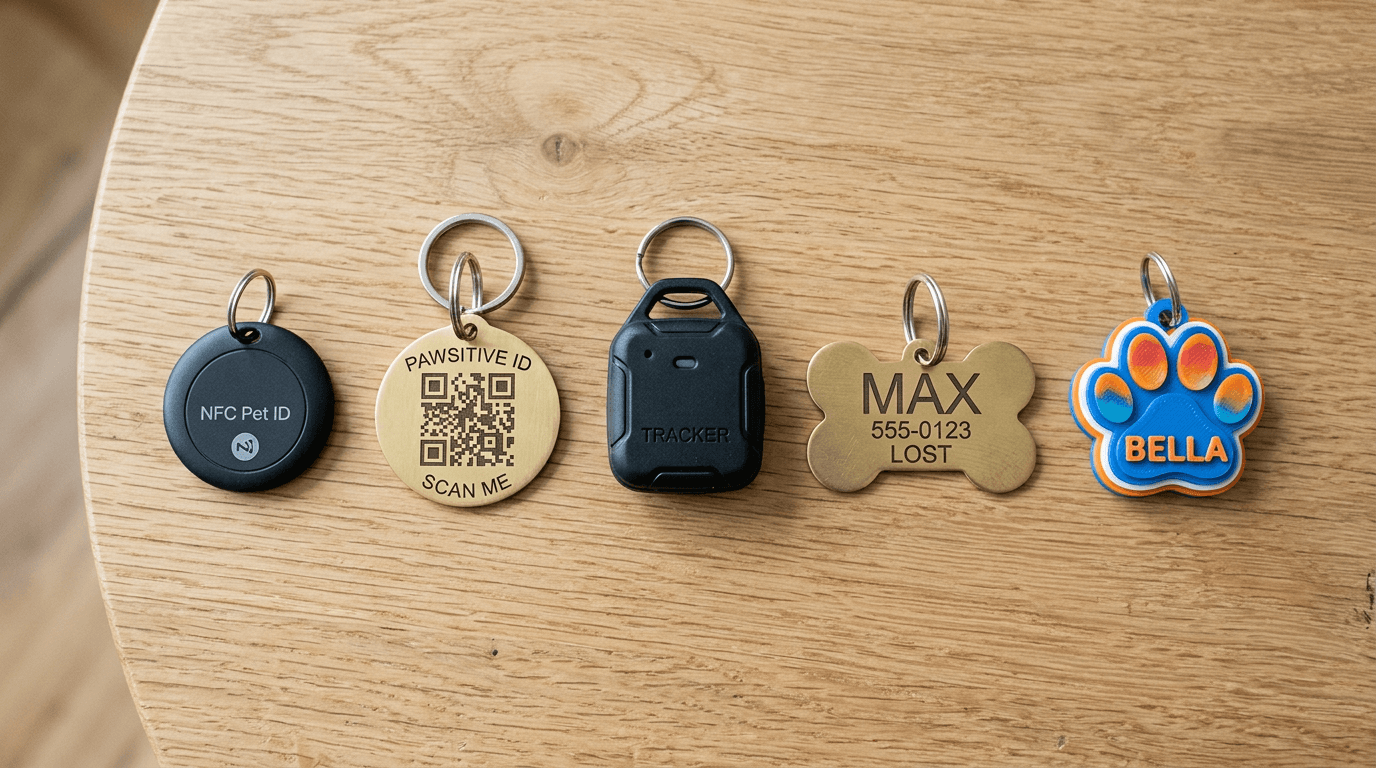
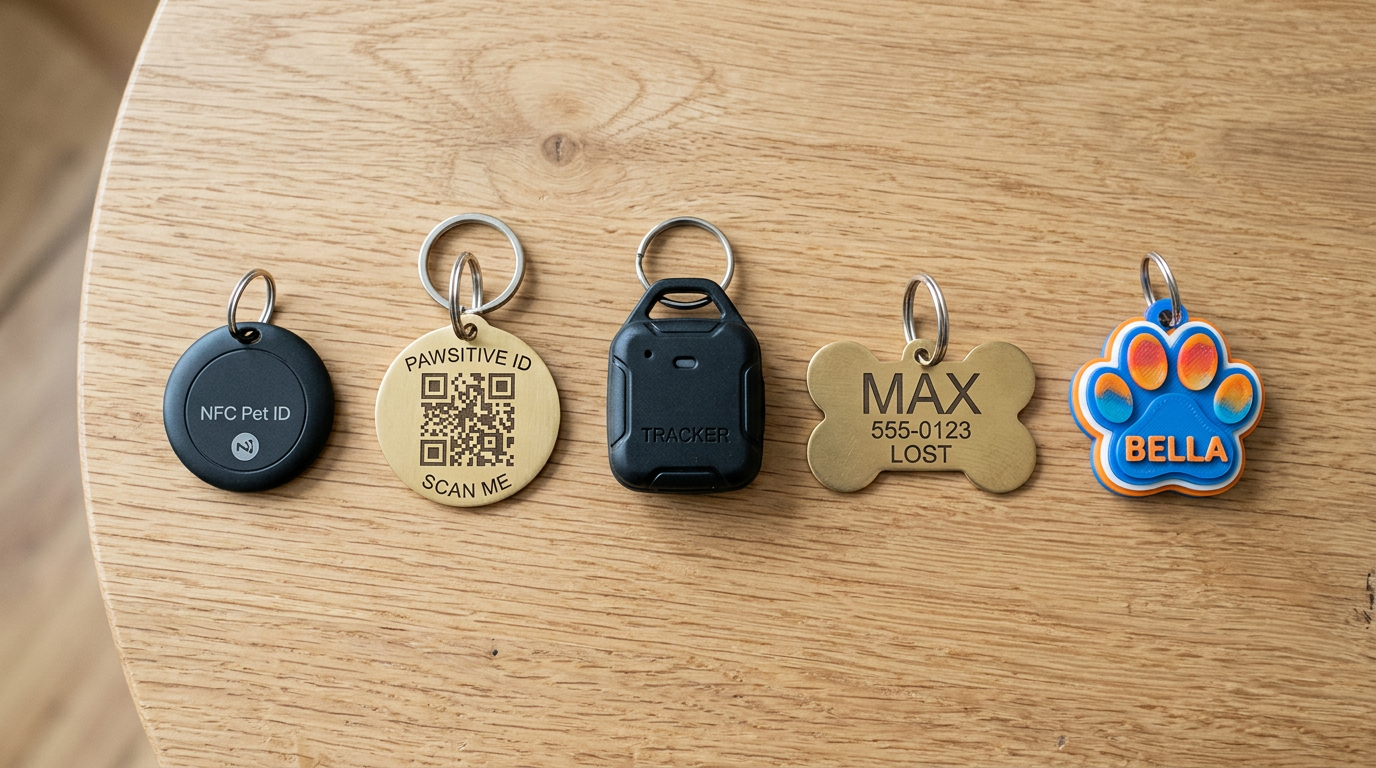
NFC tags
NFC (Near Field Communication) tags are small chips that transmit data when a smartphone is held against them. No app needed - modern iPhones and Android phones read NFC natively. The finder taps the tag to the back of their phone and a webpage opens with the pet's profile.
Pros: No battery, no charging, survives water and dirt, extremely durable (rated for 100,000+ taps), works instantly with no app download. Good NFC platforms also support hybrid mode - storing a vCard directly on the chip so your contact details are available even without internet.
Cons: Requires physical contact (someone needs to actually hold their phone to the tag), range is a few centimetres only. Some older phones don't support NFC, though this is increasingly rare in 2026.
QR code tags
A printed QR code on a tag or collar attachment. The finder opens their camera app, scans the code, and gets directed to a URL.
Pros: Almost universally scannable, cheap to produce, works on any phone with a camera.
Cons: QR codes degrade. Scratches, UV exposure, mud, and wear make them harder to scan over time. They require the finder to actively point a camera and hold steady, which is harder than it sounds with a wriggling dog. No offline capability. For a deeper comparison, we wrote a full breakdown of NFC vs QR for pet tags.
GPS trackers
GPS trackers (like the Tractive or Fi collar) provide real-time location tracking via cellular or satellite signals. They're a fundamentally different product from ID tags - more like a tracking device that happens to attach to a collar.
Pros: Real-time location on a map, geofencing alerts, activity monitoring.
Cons: Requires charging (usually every few days to a couple of weeks), ongoing monthly subscription ($5-15/month typically), adds bulk and weight to the collar, relies on cellular coverage. Not a replacement for an ID tag - more of a complement. If the battery dies, you've got nothing. If a finder picks up your pet, a GPS tracker doesn't tell them who to call.
Bluetooth tags
AirTags, Tile, and Samsung SmartTags use Bluetooth and crowd-sourced location networks. They're not designed for pets specifically, but plenty of people put them on collars.
Pros: Good crowd-sourced location network (especially AirTags via Apple's Find My), relatively small, long battery life.
Cons: Not pet-specific - no profile, no medical info, no messaging. Limited range (about 10 metres for direct Bluetooth). Crowd-sourced location only works when another compatible device passes nearby. No way for a finder to identify the pet or contact the owner by interacting with the tag itself. Apple has also added anti-stalking features that can cause AirTags to alert strangers that they're being "tracked," which creates confusion when the tag is legitimately on a pet's collar.
GPS trackers and Bluetooth tags solve a different problem than smart ID tags. They help you find your pet; ID tags help other people return your pet. Many owners use both - a smart ID tag for identification and an AirTag or GPS tracker for location.
The Australian market: what's available
Here's a fair rundown of the main options available to Australian pet owners right now.

Capture 360
Capture 360 sells NFC and QR pet tags through a gadget-catalogue style storefront. They offer a range of tag styles and the platform covers basic profile and notification features. If you want a look at the detail, we've done a side-by-side comparison with Capture 360.
HeyBuddy
HeyBuddy positions itself as "no subscription" but does have paid tiers that unlock additional features. The free tier covers basic profile functionality. Worth checking what's actually included before you assume "free" means full-featured. We've compared HeyBuddy and FoundYa in detail.
Generic imports
Search "NFC pet tag" on Amazon or eBay and you'll find dozens of cheap options - often under $10. These typically work by redirecting a URL to a simple form or profile page. The tags themselves are fine (an NFC chip is an NFC chip), but the platform behind them is usually bare-bones: a basic profile page, no notifications, no lost mode, no household management. Some services have disappeared entirely, leaving the tag as a dead link on your pet's collar.
Jewelry-style smart tags
Several brands sell attractive metal tags - anodised aluminium, brass, or stainless steel - with a QR code or URL etched on the surface. They look great. Functionally, they're usually a pretty housing for a URL redirect with minimal platform behind it. We've covered jewelry-style tags in more detail.
FoundYa
That's us. FoundYa is a full platform - pet profiles, lost mode, Sentinels (community geo-alerts), household management, reminders, vet records, and hybrid NFC that works offline. We're built in Australia and our tags are designed and manufactured here.
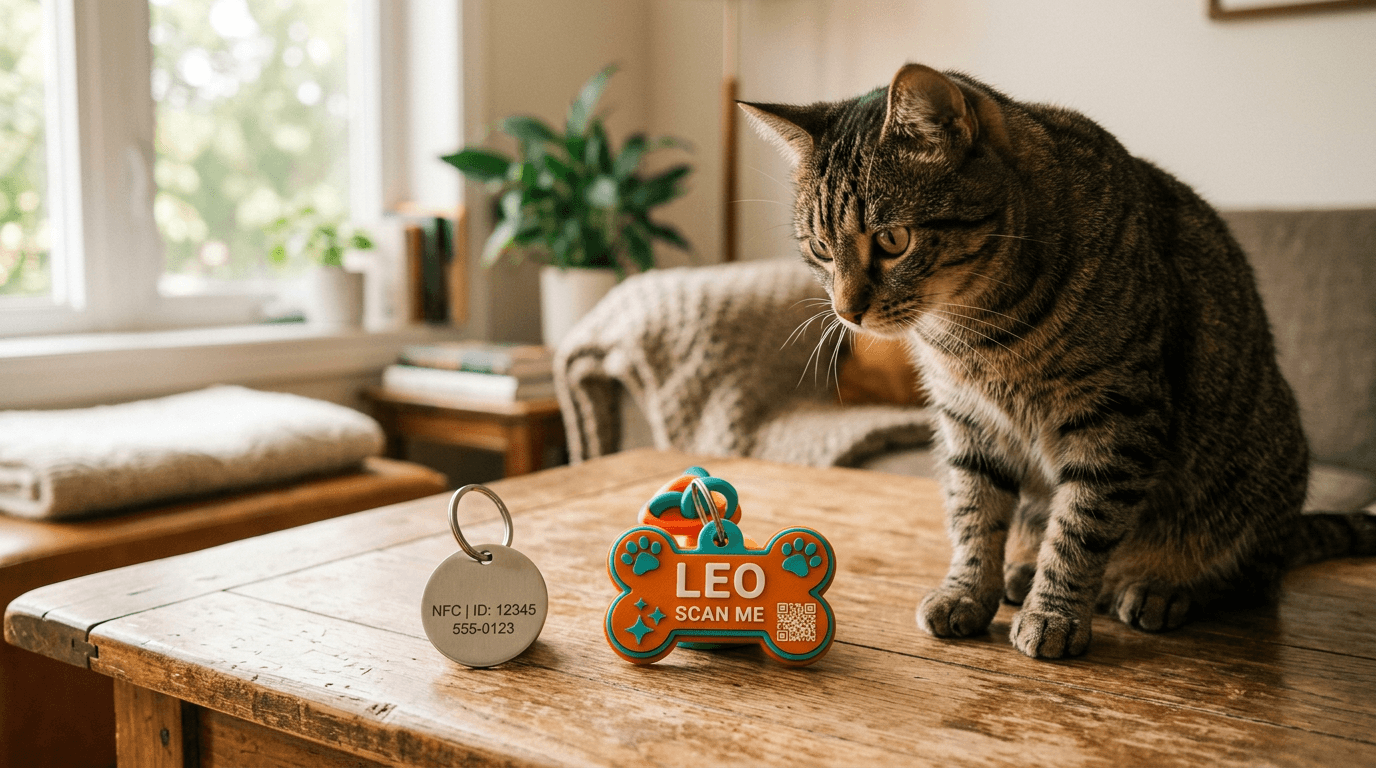
The difference we're most proud of: you don't need our hardware. FoundYa works with any NFC chip. Grab a $2 sticker, a coin from eBay, or 3D-print your own tag - the platform is the product, not the tag itself. We do sell tags (custom 3D-printed designs with your pet's name and icon), but you're never locked into buying them. One-time activation, no monthly subscription for core features. You can read our full introduction for the longer story.
What to look for when choosing
Regardless of which provider you're considering, these are the questions worth asking:
What happens if the company shuts down? This is the big one. If the platform behind your tag disappears, does the tag still work? With NFC tags that support hybrid mode, your contact details are stored directly on the chip - the tag still identifies your pet even if the cloud service goes offline. Most QR-only and URL-redirect tags become useless if the company folds.
What does the free tier actually include? "No subscription" can mean wildly different things. Does free include scan notifications? Lost mode? Multiple pets? Household members? Check the fine print.
Is your data portable? Can you export your pet's records? If you switch providers, do you lose everything?
Do you need their specific hardware? Some platforms only work with their own tags. Others - like FoundYa - work with any compatible NFC chip, which means you're not locked in.
What's the real ongoing cost? One-time purchase? Annual renewal? Premium tier required for useful features? GPS trackers all have monthly subscriptions. Some "no subscription" tag platforms gate core features behind paid tiers.
Does the tag work offline? If someone finds your pet in an area with no mobile signal - a bush track, a campground, a dead zone - does the tag still provide useful information? Hybrid NFC stores data directly on the chip. QR codes and basic NFC tags that rely on a URL do not.
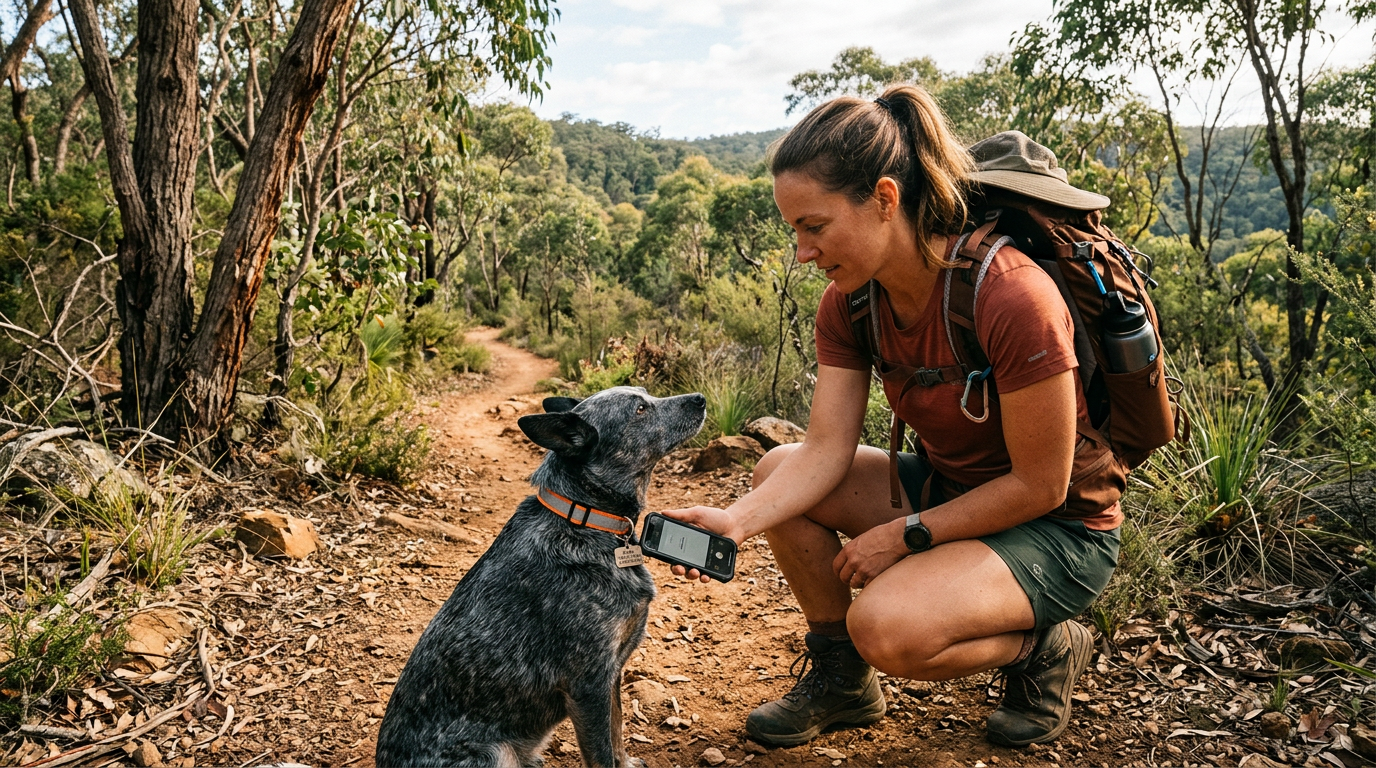
Be wary of tags that are only a URL redirect with no data on the chip itself. If the finder has no signal, or the hosting company shuts down, the tag is just a piece of metal or plastic with a dead link.
Questions to ask any provider (including us)
We reckon any company selling smart pet tags should be able to answer these without dodging:
- If your company shuts down tomorrow, does my pet's tag still show my contact details? Hybrid NFC stores a vCard on the chip. If the answer is "no" or "we'll always be around," push harder.
- What data do you collect from people who scan my pet's tag? Privacy matters. Some platforms harvest finder data aggressively. Others keep it minimal.
- Can I use my own NFC chip, or do I have to buy yours? Hardware lock-in is a business model, not a feature.
- What exactly is free and what costs extra? Get a straight answer. "Free with optional premium" covers a lot of ground.
- Where is my pet's data stored and who has access? Data privacy matters. Understand where the servers are and what the privacy policy actually says.
- How do you make money? If the product is free and there's no clear revenue model, you might be the product. We've written about how we keep the lights on because we think transparency matters.
- What happens to my tag if I cancel my account? Can you still use the chip? Is the data wiped? Can you re-register it elsewhere?
Any provider that gets defensive about these questions is telling you something. Good companies welcome scrutiny - it's the ones with nothing to hide who answer the fastest.
Making your choice
There's no single "best" smart pet tag. The right choice depends on your budget, how many pets you have, what features matter to you, and how much you trust the company behind the platform.
If you want real-time GPS tracking, you need a dedicated tracker - no NFC or QR tag does that. If you want a beautiful piece of collar jewelry with basic identification, the metal tag options are genuinely nice. If you want a full platform for daily pet management that works with whatever hardware you've got, that's where we live.
Whatever you choose, the most important thing is that your pet has something digital on their collar. An engraved tag with last year's phone number is better than nothing, but a scannable tag with a current profile, your vet's number, medical info, and a way for a stranger to message you instantly? That's a meaningfully better safety net.
Ready to explore? Try our Tag Designer to see what a FoundYa tag looks like, or sign up to link any NFC chip and start building your pet's profile. And if you've got tough questions - we mean it - ask us. We'd rather earn your trust than dodge your scrutiny.