Found a Lost Pet? Here's Exactly What to Do
You're walking to the shops, heading home from work, or pulling into the driveway - and there's a dog sitting on the footpath looking lost. No owner in sight. The dog looks at you. You look at the dog. Now what?
Finding a lost pet is one of those moments where doing the right thing in the right order makes all the difference. Most people want to help but aren't sure how. Here's a clear, practical guide to getting that animal home safely.
Approach safely - read the animal first
Before you do anything, take a breath and observe. A lost dog or cat is almost certainly stressed, and stressed animals can behave unpredictably - even friendly ones.
For dogs:
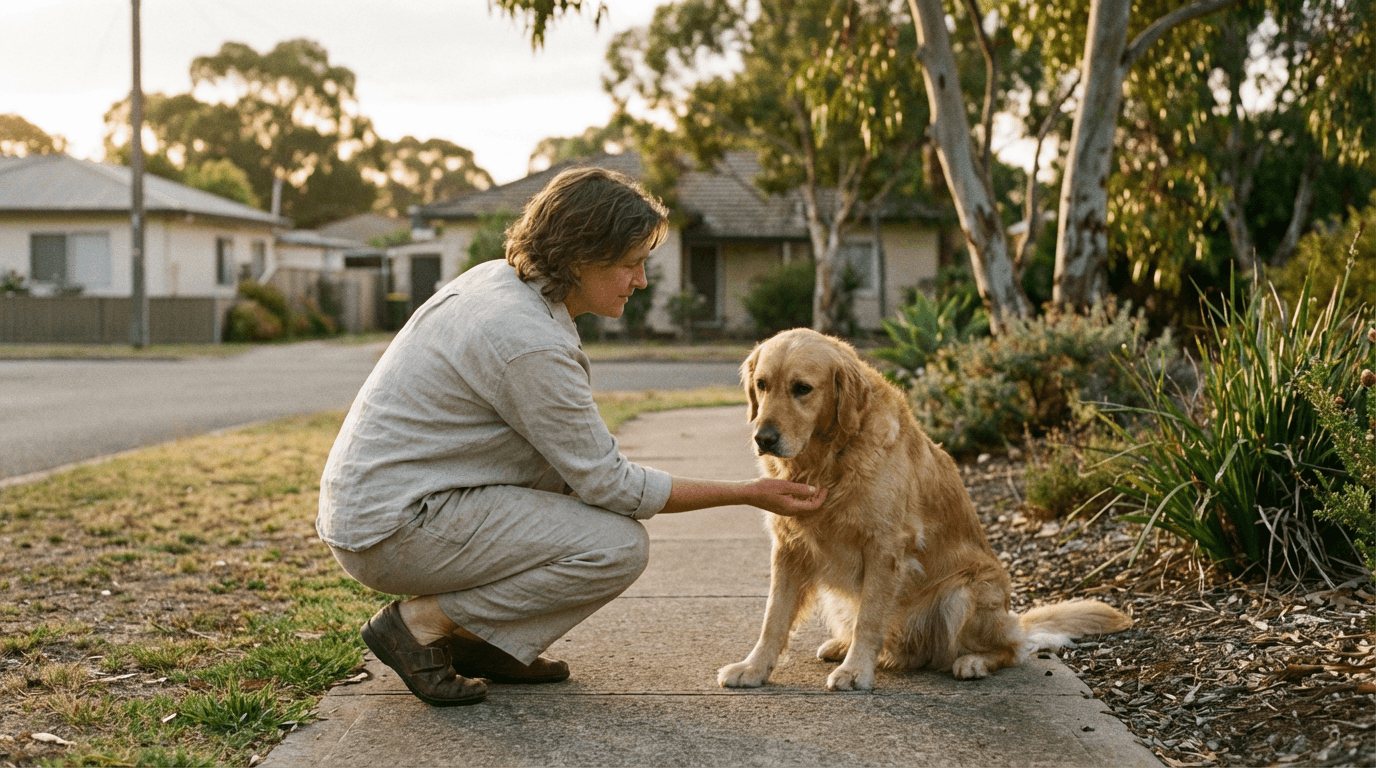
- Approach slowly from the side, not head-on. Direct eye contact and a fast approach can feel threatening.
- Crouch down and let the dog come to you. Offer the back of your hand to sniff.
- Watch for warning signs: stiff posture, whale eye (showing the whites), tucked tail, growling, or lip-licking. If the dog seems aggressive or extremely fearful, keep your distance and call your local council's animal management team instead.
For cats:
- Cats are harder. A lost cat that's outdoors might be genuinely lost, or it might be an outdoor cat on its regular beat. Look for signs of distress - vocalising, matted fur, visible injuries, or looking thin.
- Don't chase. Sit nearby, speak softly, and let the cat approach if it's going to.
Never corner a frightened animal. A dog that feels trapped is far more likely to bite. If the animal won't come to you, note the location and call your local council or an animal rescue group.
The goal right now is simple: keep the animal safe and calm while you figure out who it belongs to.
Check for ID - tags, chips, and taps
Once the animal is calm enough to approach, check the collar. This is where things get interesting depending on what you find.
Traditional engraved tag
If there's a metal tag with a phone number, you're in luck. Call the number. Simple. Though if the number's been scratched to near-illegibility or the owner moved three years ago and never updated it - well, that's a common dead end.
NFC smart tag
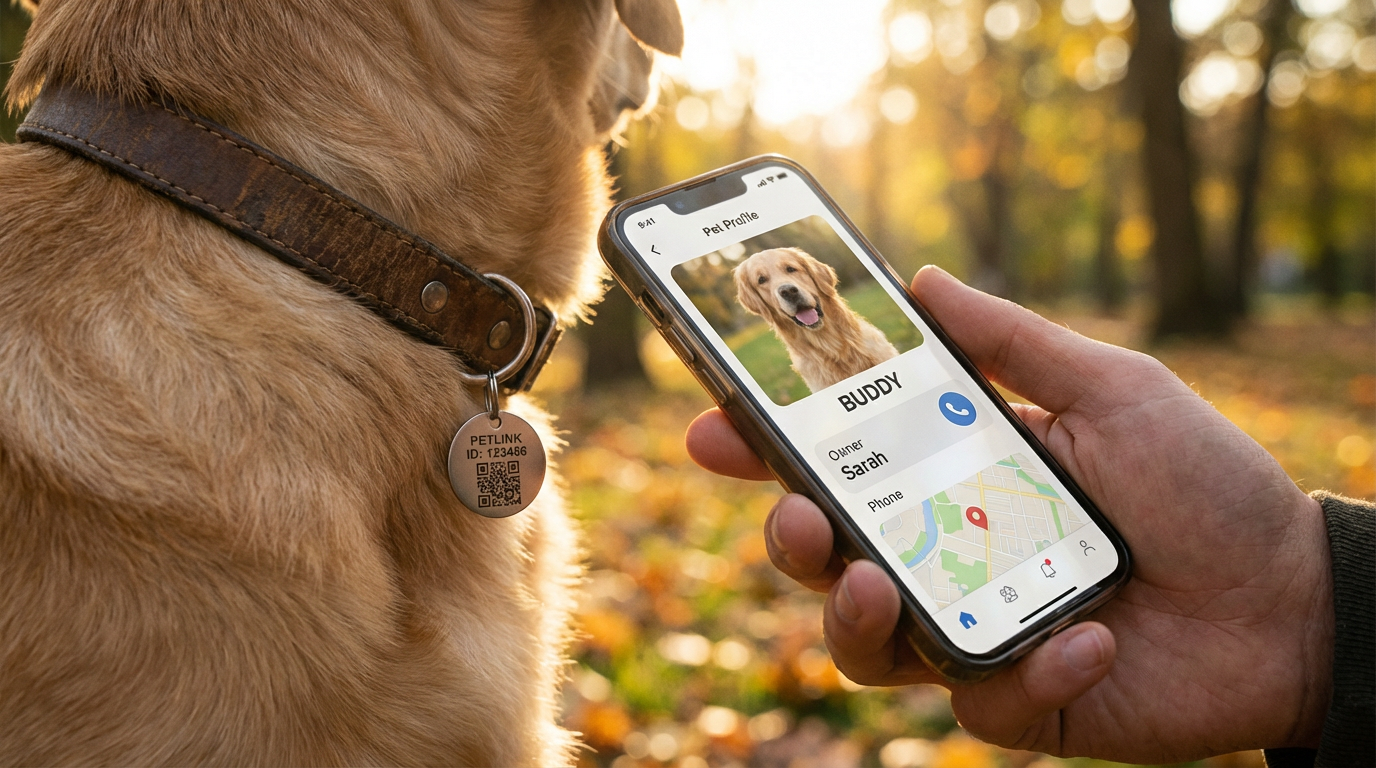
If the tag looks like a smooth disc, coin, or sticker without engraved text, try tapping your phone against it. Just hold the back of your phone close to the tag for a second. If it's an NFC tag, your phone will vibrate and open a pet profile in your browser - no app needed, nothing to download.
With a FoundYa tag, you'll see the pet's photo, name, and a way to message the owner instantly. The owner gets a notification with your approximate location, so they know roughly where their pet is. The whole thing takes about two seconds from tap to connection.
Even if you're somewhere without mobile signal - a bush track, a dead spot in the suburbs - FoundYa's hybrid NFC stores the owner's contact details directly on the chip as a vCard. So you'll still get a phone number and name saved to your contacts, even fully offline.
Not sure if a tag is NFC? Just tap your phone to it. If nothing happens, it's likely a traditional tag or QR code. If a profile pops up, you've just made someone's day.
No collar at all
No collar doesn't necessarily mean no owner. Collars slip off, dogs wriggle out of harnesses, and indoor cats make surprise escapes. The next step is getting the animal scanned for a microchip.
If you can't reach the owner
Sometimes there's no tag, or the tag info is outdated, or nobody picks up. Here's what to do next.
Get a microchip scan
Take the animal to any vet clinic - they'll scan for a microchip for free. Microchips store a registration number that links to the owner's contact details in a national database. It's the most reliable form of permanent ID, but it requires a scanner that only vets and shelters have. The person who finds your pet at the park can't scan a microchip with their phone.
If the chip details are current, the vet can contact the owner directly. If they're not (and they often aren't), you'll need to try other channels.
Contact your local council
Every council in Australia has an animal management team. Call them to report the found pet with a description - breed, colour, size, sex, location, and any tag or chip details. They'll check against reported missing animals and can arrange collection if needed.
Post on lost-pet groups
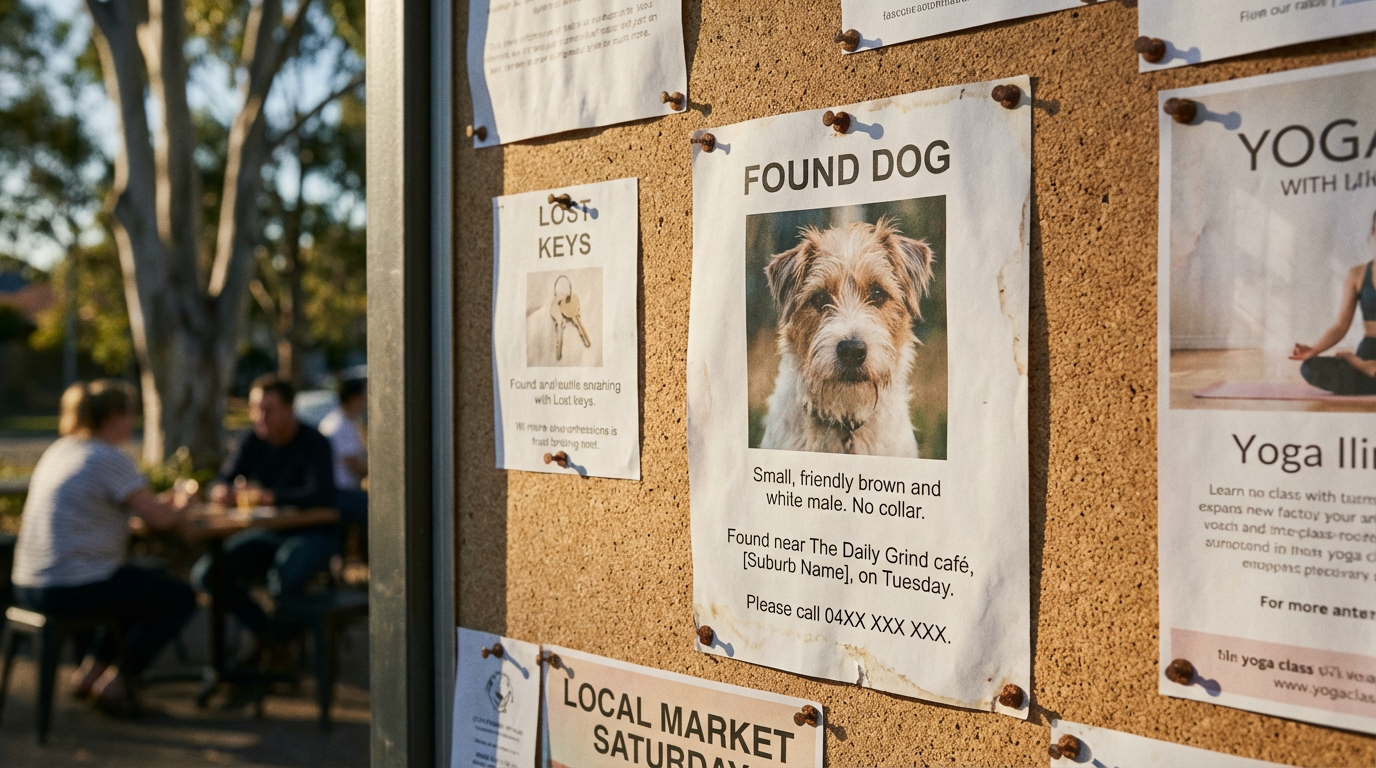
Local Facebook groups like "Lost & Found Pets [Your Area]" are surprisingly effective. Post a clear photo with:
- Where and when you found the animal
- Breed, colour, size, and any distinguishing marks
- Whether it has a collar, tag, or microchip
- Your contact details (a phone number is better than "DM me")
Check local groups for recent "missing" posts too - the owner might have already posted.
Contact shelters and rescue groups
Call local animal shelters, rescue organisations, and the RSPCA. Give them the same description. Some areas have online lost-and-found databases like PetRescue that are worth checking and listing on.
Keeping the found pet safe in the meantime
If you're looking after the animal while you track down the owner, a few practical tips:
- Water first. A lost animal is almost certainly dehydrated. Offer fresh water in a shallow bowl.
- Quiet space. A stressed animal needs somewhere calm. A laundry, bathroom, or garage (weather permitting) works well. Keep them away from your own pets - you don't know this animal's history, vaccinations, or temperament around other animals.
- Don't feed unknown food. It's tempting, but you don't know the animal's allergies or dietary needs. Plain water is safe. If they seem genuinely starved, a small amount of plain cooked chicken or rice is low-risk.
- Keep them contained. A lost dog that bolts from your yard is now doubly lost. Use a leash, close gates, and don't leave them unsupervised in an unfenced area.
- Take a photo. Even if you've already posted online, a clear photo on your phone makes everything easier - showing vets, sharing with neighbours, updating your posts.
If the animal is injured, take it to the nearest vet immediately. Emergency treatment for stray and injured animals is generally provided regardless of ownership status.
What NOT to do
This bit matters. Good intentions can go sideways if you're not careful.
- Don't keep it. In most Australian states, you're legally required to make reasonable efforts to find the owner. "Finders keepers" doesn't apply to pets. Contact your council, get the chip scanned, and post online before assuming the animal is abandoned.
- Don't post "free to good home." You don't own this animal. Rehoming someone else's pet - even with good intentions - can have legal consequences and, more importantly, a family might be desperately searching for this exact animal right now.
- Don't remove the collar or tags. Even if the tag info seems outdated, leave it on. It's still evidence of ownership and might have details you missed.
- Don't assume it's a stray. A dirty, thin dog isn't necessarily homeless. It might have been lost for days. An outdoor cat without a collar might live three houses down. Exhaust your search before drawing conclusions.
You might be the reason a pet gets home
Most lost pets are found by ordinary people going about their day. You don't need special training or equipment - just a bit of patience and a phone.
If you've ever lost a pet yourself, you know the gut-wrenching wait. Being the person on the other side of that - the one who picks up the phone or taps the tag and says "I've got your dog" - is genuinely one of the best feelings going.
Want to be part of a community that helps bring pets home? Sign up as a FoundYa Sentinel and you'll receive alerts when a pet goes missing in your area. It costs nothing and takes two minutes. You can also read our guide on what to do if your own dog goes missing - because the best time to have a plan is before you need one.