Travelling with Pets: Keeping Them Safe on the Road
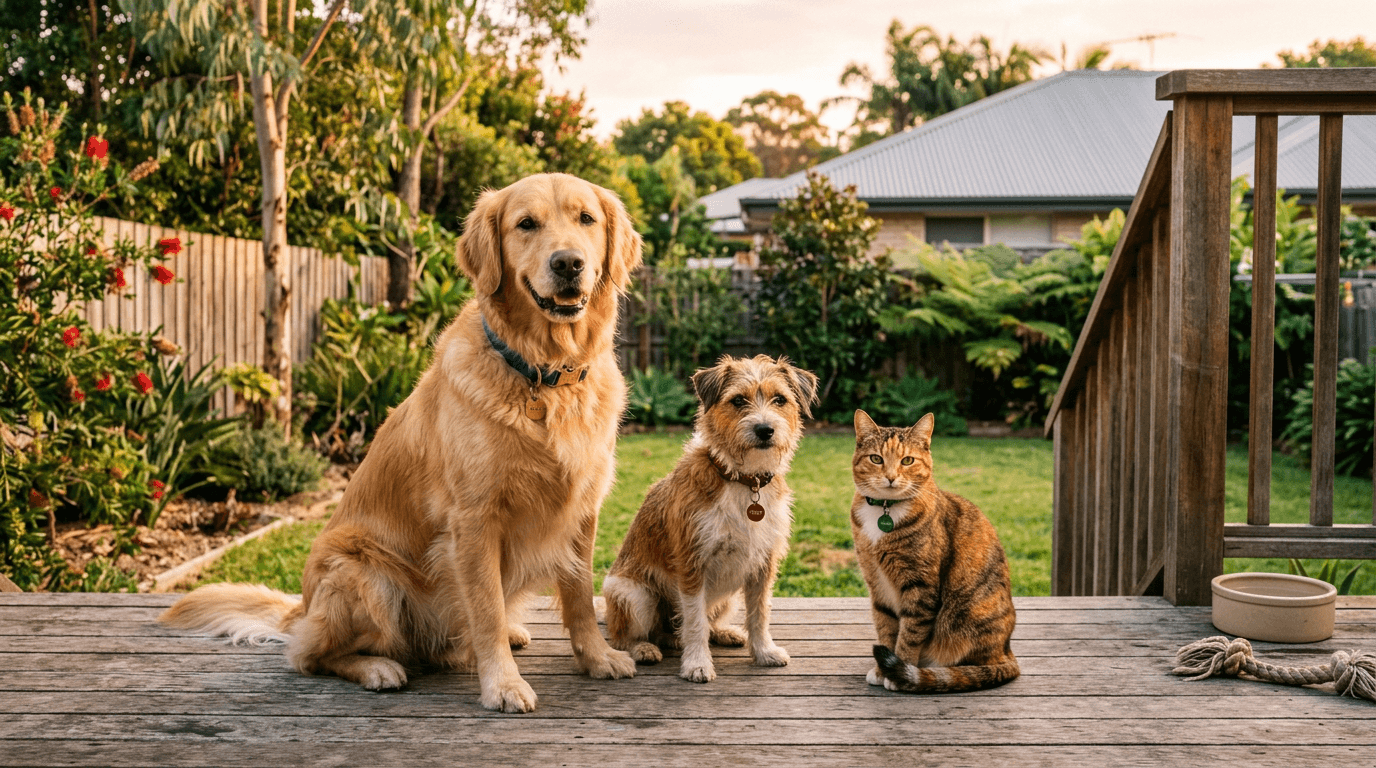
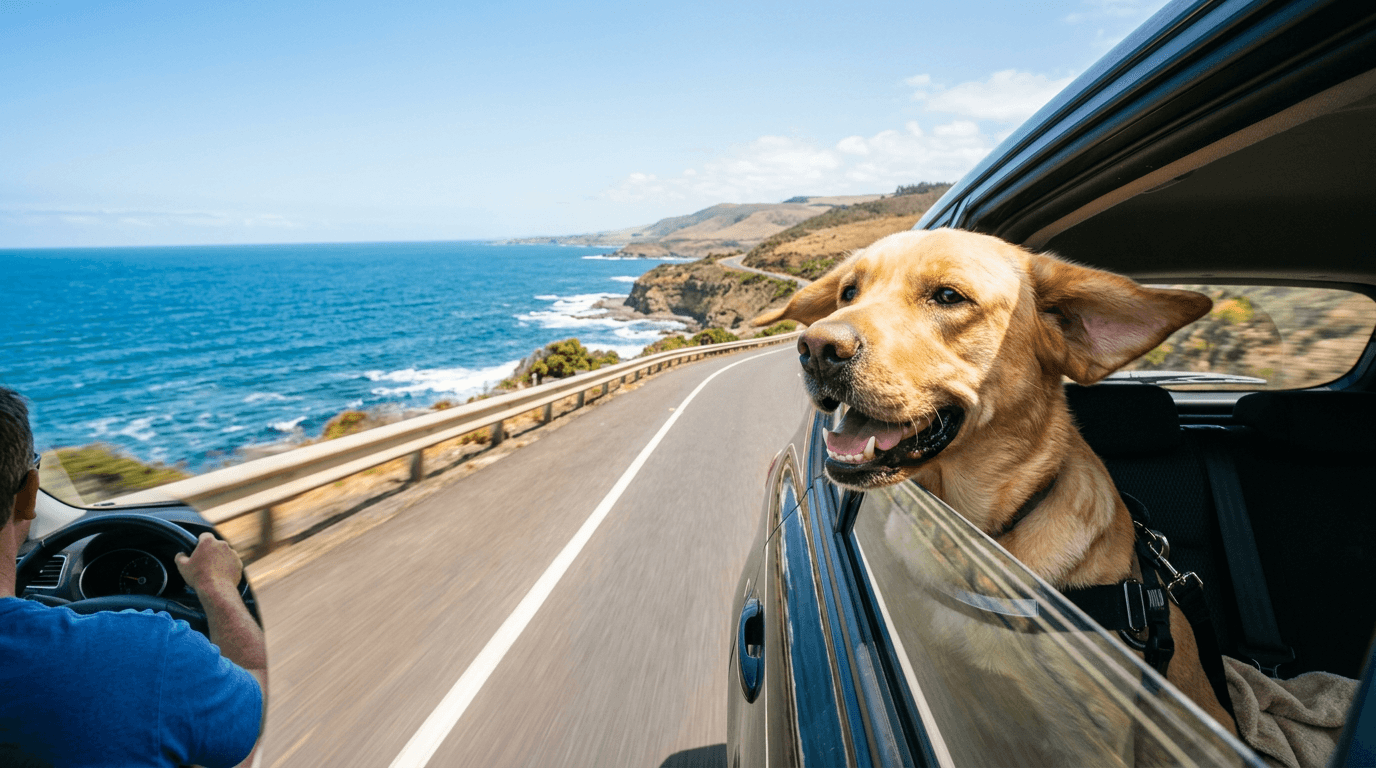
Taking your pet on a road trip is one of the best parts of having one. Windows down, ears flapping, tail going - and that's just the first five minutes before they fall asleep on the back seat for four hours.
But travelling with pets also introduces risks that don't exist at home. Unfamiliar places, dodgy fences, open gates, and stretches of highway where there's no mobile signal for 200 kilometres. A bit of preparation before you leave makes the difference between a great trip and a stressful one.
Here's what actually matters when you're hitting the road with your pet in Australia.
Before you leave: the pre-trip checklist
Update your pet's contact info
If you're heading somewhere for a week or two, your home phone number and local vet aren't necessarily the most useful contacts. Update your pet's profile with:
- Your mobile number (obvious, but check it's current)
- Your travel companion's number as a backup
- The address of where you're staying, so a finder knows the area
- A note about any medications your pet needs
If you're using FoundYa, updating your pet's digital profile takes 30 seconds and means anyone who taps the tag gets your current info, not your home details from six months ago. This is one of the big advantages over an engraved tag - you can update it from anywhere without replacing anything.
Using FoundYa's household feature? Make sure your travel companion has access to your pet's profile before you leave. If something happens and you're not near your phone, they can activate lost mode and manage alerts themselves.
Check vaccination and registration requirements
If you're boarding your pet at any point - even for one night at a kennel while you do a day trip - most places require up-to-date vaccination records. Kennel cough vaccination in particular often needs to be given at least two weeks before boarding.
Interstate travel within Australia doesn't require a pet passport, but different states and territories have different rules about registration, restricted breeds, and leash laws. Worth a quick check before you go, especially if you're crossing borders with a breed that's restricted in some jurisdictions.
Pack their essentials
You'd be surprised how many people forget the basics:
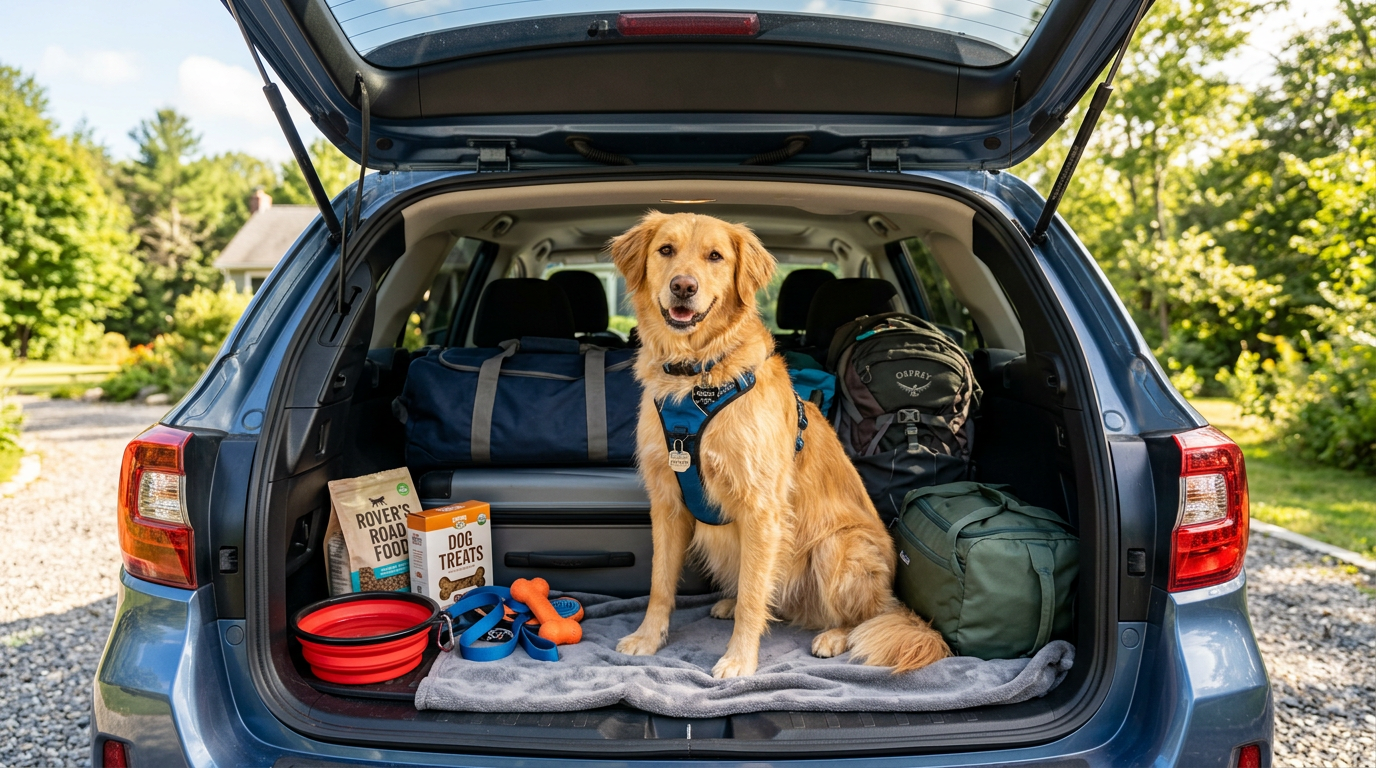
- Enough food for the trip plus a few extra days (your brand might not be available in a small town)
- Medications and a copy of the prescription
- Their regular lead, harness, and bowls
- A familiar blanket or bed - the scent helps them settle in a new place
- Poo bags - lots of them
- A recent photo on your phone in case you need to make a lost-pet post
On the road
Keep them secure in the car
In most Australian states, it's a legal requirement to restrain your pet while driving. Beyond the law, an unrestrained pet is a danger to themselves and everyone in the car. Options include:
- A crash-tested harness that clips into the seatbelt buckle
- A secured crate or carrier in the boot or back seat
- A barrier between the boot and cabin for larger dogs
Lap sitting is not restraint. Neither is "they always stay on the back seat." One hard brake and your pet becomes a projectile. Sort the restraint before you leave.
Rest stops and hydration
Plan rest stops every two to three hours. Dogs need to stretch, toilet, and drink. Cats in carriers need a quiet check (don't open the carrier in an unfenced area - a scared cat in an unfamiliar place will bolt).
Carry a collapsible water bowl and a bottle of water. Don't assume every rest stop will have water available, especially on remote highways.
Never leave your pet in a parked car, even for "just five minutes." Australian cars can reach 60°C inside within 10 minutes on a warm day, even with windows cracked. If you can't take your pet inside, one person stays with the car and the air conditioning running.
Watch the temperature
If you're travelling in the warmer months, time your driving for early morning and late afternoon. Walk your dog at rest stops in the shade, and test the ground with the back of your hand before letting them walk on asphalt - if it's too hot for your hand, it's too hot for their paws.
At the destination
This is where most pet-related travel incidents happen. Your pet is in an unfamiliar place, and the things that keep them safe at home - your fenced yard, familiar neighbourhood, routine - don't exist here.
Escape risks at unfamiliar locations
Holiday houses are notorious for dodgy fences, gates that don't latch properly, and gaps under decks that lead to who-knows-where. Before you let your pet off the lead:
- Walk the perimeter and check for gaps, low spots, or broken panels
- Test every gate - does it latch? Does it self-close? Could a determined dog nose it open?
- Check for hazards - pools without fences, toxic plants, snakes in long grass (this is Australia, after all)
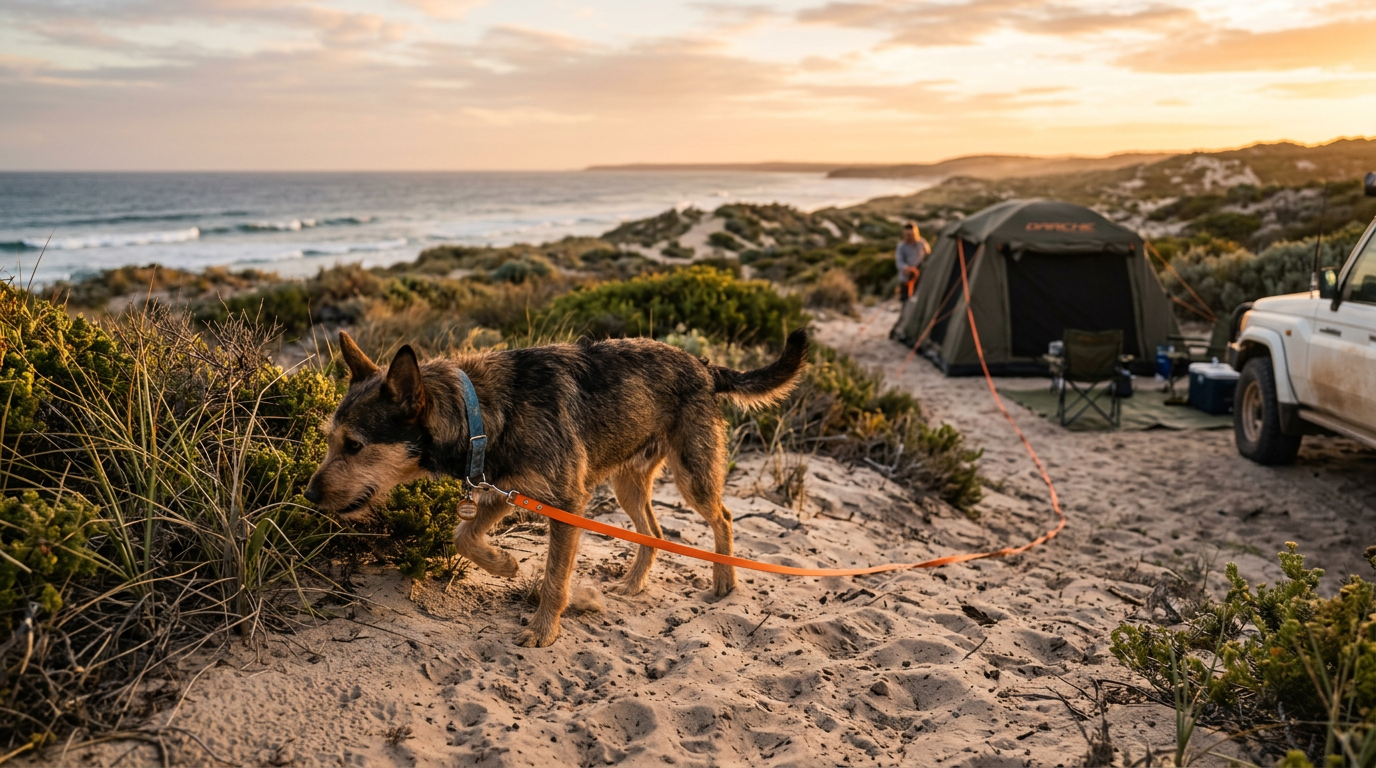
Camping sites are even riskier. There are no fences, there are interesting smells everywhere, and other campers' food is an irresistible draw. Keep your dog on a long lead tied to something solid, and never let them roam free at a campsite - even if they "always come back."
Beaches present their own challenges. Off-lead beaches are great, but know the boundaries. Many beaches have timed off-lead hours or sections, and an excited dog can cover a lot of sand very quickly. Keep them in sight and have a reliable recall before you unclip.
Unfamiliar neighbours
At home, your neighbours know your dog. They'd call you if they saw them loose. At a holiday house, no one knows your pet. If your dog gets out, they're just a stray to everyone around them. This is where having a tag with current contact info makes all the difference - a stranger who finds your dog can tap the tag and reach you immediately, without needing to take your dog to a vet to scan a microchip.
When there's no signal
Here's a scenario that's uniquely Australian: you're camping in the bush, or staying at a property outside a small town, and there's no mobile reception. Your dog's microchip is useless because the nearest vet is an hour's drive away. A QR code tag is useless because there's no internet to load the profile. A traditional engraved tag might work - if it's still legible.
This is exactly the problem FoundYa's hybrid NFC was built for. The tag works in two modes: online, it opens the full cloud profile with messaging and location. Offline, it delivers a vCard stored directly on the chip itself - your name, phone number, and pet's details, saved straight to the finder's phone with no internet required.
In a country where "no signal" is a regular occurrence outside metro areas, offline identification isn't a nice-to-have. It's essential.
FoundYa's hybrid NFC stores a vCard directly on the chip. Even with zero signal, a finder taps the tag and gets your contact details saved to their phone. No app, no internet, no worries. Learn how it works.
Interstate considerations
Travelling between states isn't complicated, but there are a few things worth checking:
- Council registration - if you're staying somewhere for an extended period, check whether the local council requires visiting dogs to be registered. Most don't for short stays, but rules vary.
- Restricted breeds - breed-specific legislation differs between states. If your dog is a restricted breed (or could be mistaken for one), carry your registration paperwork.
- Emergency vet locations - search for the nearest emergency vet at your destination before you leave, not when you need one at 11 pm. Save the number in your phone.
- Update your vet contact - if you're away for more than a week, consider adding your destination's nearest vet to your pet's profile so a finder has a local option.
The travel checklist
Before you turn the key:
- Pet's profile updated with current contact info and destination details
- Travel companion has access to pet's profile (household sharing)
- Vaccination records packed or accessible digitally
- Pet secured in car with proper restraint
- Water, food, bowls, medications packed
- NFC tag on collar with current info (hybrid NFC for offline areas)
- Emergency vet at destination saved in your phone
- Recent photo on your phone
Most of this takes ten minutes. And most of it you only need to do once - update the destination-specific bits each trip and the rest stays current.
Hit the road
Travelling with pets is brilliant. The whole point of having a dog is that they make everything better, including road trips. A bit of prep, a current tag, and some common sense about fences and temperatures, and you're set.
If your pet doesn't have a FoundYa profile yet, it's a good excuse to set one up before your next trip. Update it from anywhere, share access with your travel companions, and know that if the worst happens in a no-signal campsite, the hybrid NFC on their collar still works. Check out our Help Centre for guides on getting started.