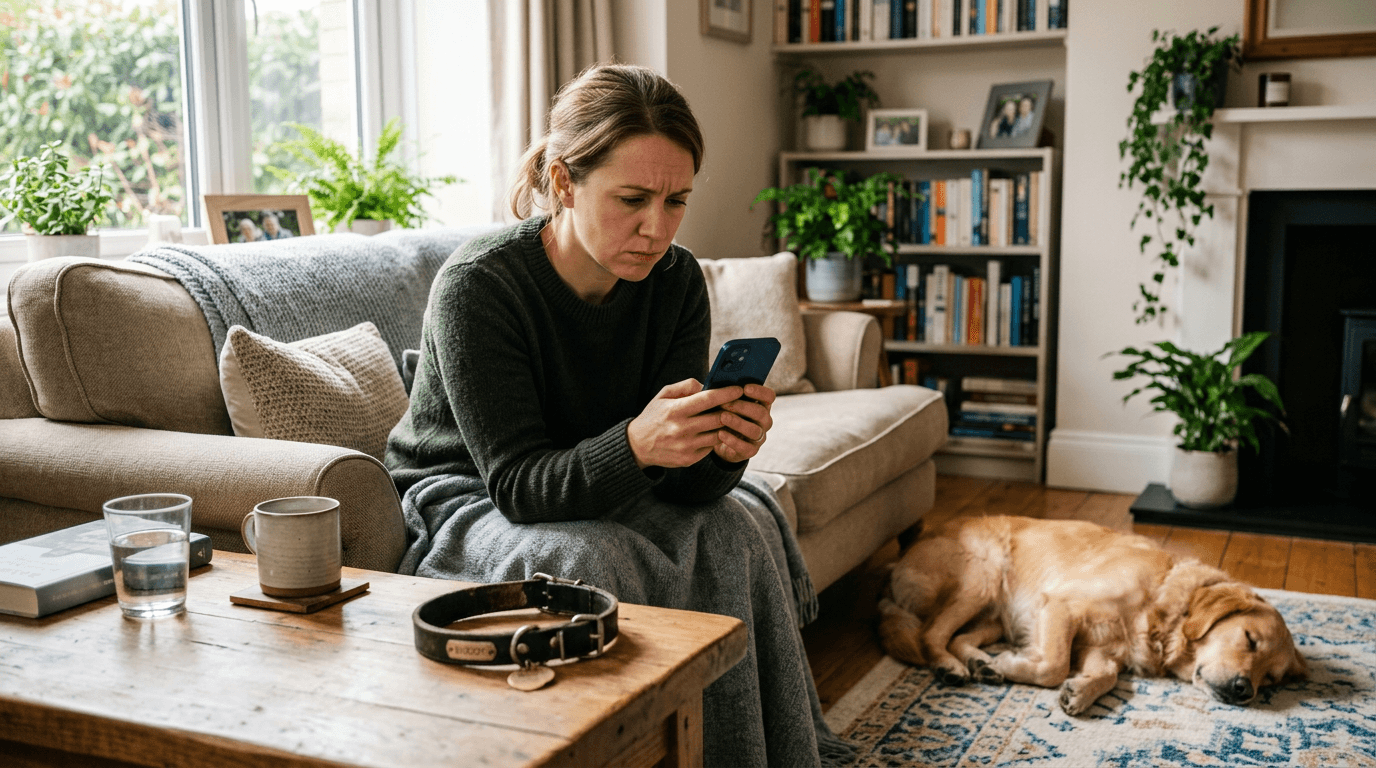
Why Your Pet's Tag Info Goes Stale (And How to Fix It)
Quick question: what phone number is on your pet's collar tag right now? Is it still the right one?
If you had to pause and think about it, you're not alone. Most pet owners set up their pet's identification once - the day they got the tag, or the day the puppy came home - and then never touch it again. Meanwhile, life keeps moving. You change phone numbers. You move house. You switch vets. Your emergency contact relocates to Queensland.
The tag stays the same. And if your pet goes missing tomorrow, the information on it might be completely useless.
How it happens without you noticing
Nobody wakes up one morning and decides to let their pet's ID go stale. It just... drifts. Here are the moments that quietly make your tag obsolete:
You move house. The address engraved on the tag is now your old rental. If someone finds your dog wandering near your new place and reads the tag, the address points them to a suburb you left six months ago.
You change phone numbers. Maybe you switched carriers for a better deal, or you got a new number after a phone upgrade. The old number on the tag now goes to voicemail - or worse, to a stranger.
You switch vets. Your old clinic closed, or you moved too far away, or you just found a better one. The tag still says "Dr. Patterson, Northside Vet" - a clinic that doesn't have your current records.
Your pet starts a new medication. The tag says nothing about the twice-daily heart medication your dog started last year. A well-meaning finder feeds them something that interacts with it.
Your emergency contact moves interstate. You listed your sister on the tag because she lived five minutes away. Now she's in Perth. She's still a contact, sure - but she can't swing by and collect your pet anymore.
None of these feel like urgent problems at the time. But stack a few of them together and your pet's tag is effectively fiction.
The real cost of outdated info
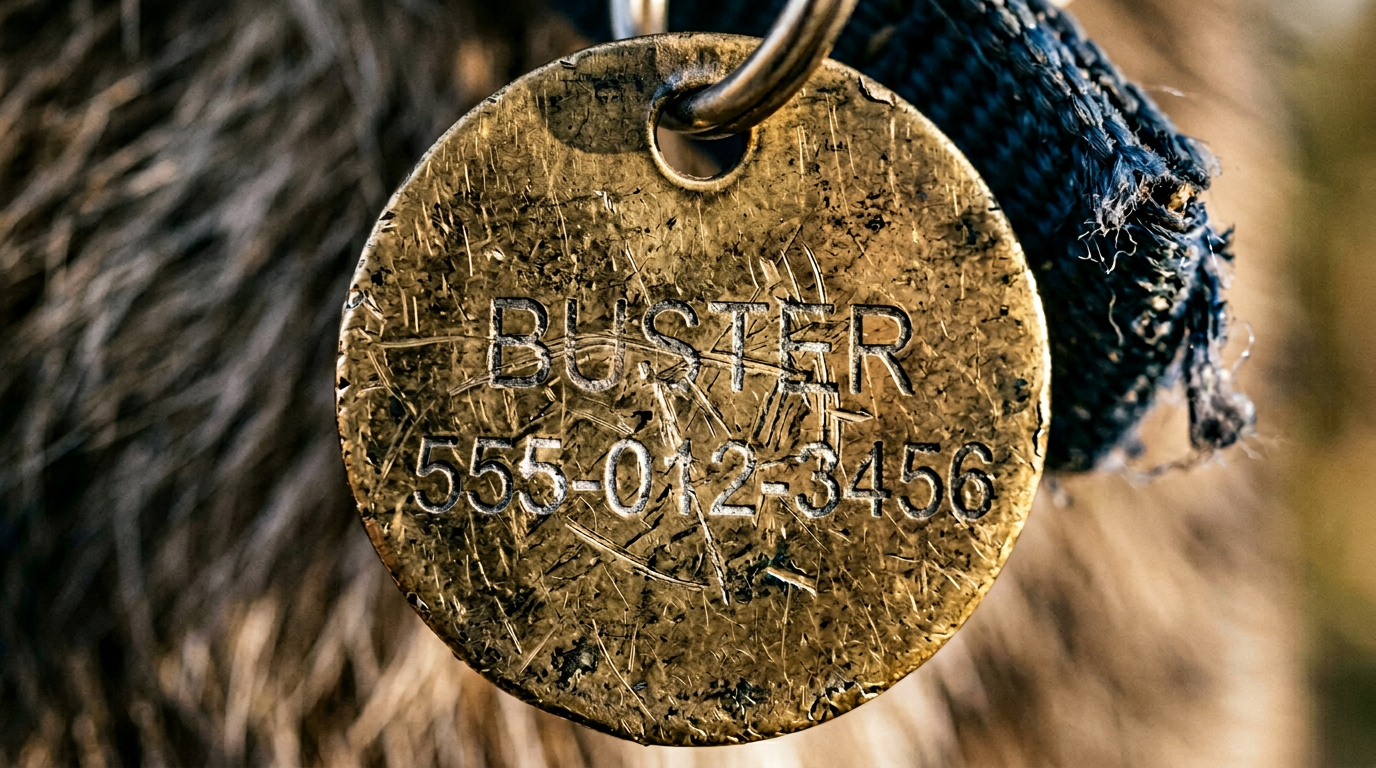
Here's what happens when someone finds your pet and reads an outdated tag:
They call the phone number. It's disconnected, or someone who's never heard of your dog picks up. Dead end.
They try the address. It's your old house. The new occupant says "no idea, sorry." Another dead end.
They call the vet listed on the tag. The clinic says "we don't have a patient by that name" because you switched practices two years ago.
At this point, the finder has done everything the tag asked them to do, and they've hit a wall. The generous ones will take your pet to a shelter and hope the microchip sorts it out. The busy ones might just move on with their day. Either way, your pet isn't getting home as quickly as they should - and in some cases, they're not getting home at all.
A disconnected phone number on a pet tag doesn't just slow things down - it can end the search entirely. Most people will try the number once, maybe twice. If nobody answers, many won't take the next step of finding a vet or shelter.
The frustrating part is that none of this is the finder's fault. They did exactly what they were supposed to do. The system failed because the information was stale.
Audit your pet's ID right now
This is the part where you actually check. Grab your pet's collar (or call them over) and go through this:
1. The collar tag
- Is the phone number current?
- Is the address current?
- Is the name on the tag your pet's actual registered name (the one on vet and council records)?
- Can you actually read the text, or has it worn down?
2. The microchip registry
Log into your pet's microchip registry (PetAddress, Central Animal Records, HomeAgain, whichever one your chip is registered with) and check:
- Is your phone number current?
- Is your address current?
- Is your emergency contact still in the same city?
- Is the contact email one you still check?
If you can't remember which registry your pet's chip is on, your vet can scan the chip and tell you the chip number - from there you can look up the registry.
3. Any digital profiles
If you're using a smart tag platform, check that profile too. When did you last update it? Does it still have the right vet listed? The right medications? A recent photo?
Do this audit every time something changes in your life - new phone, new address, new vet, new medication. And set a reminder to check everything at least once every six months, even if you reckon nothing's changed.
Engraved vs digital: the update problem
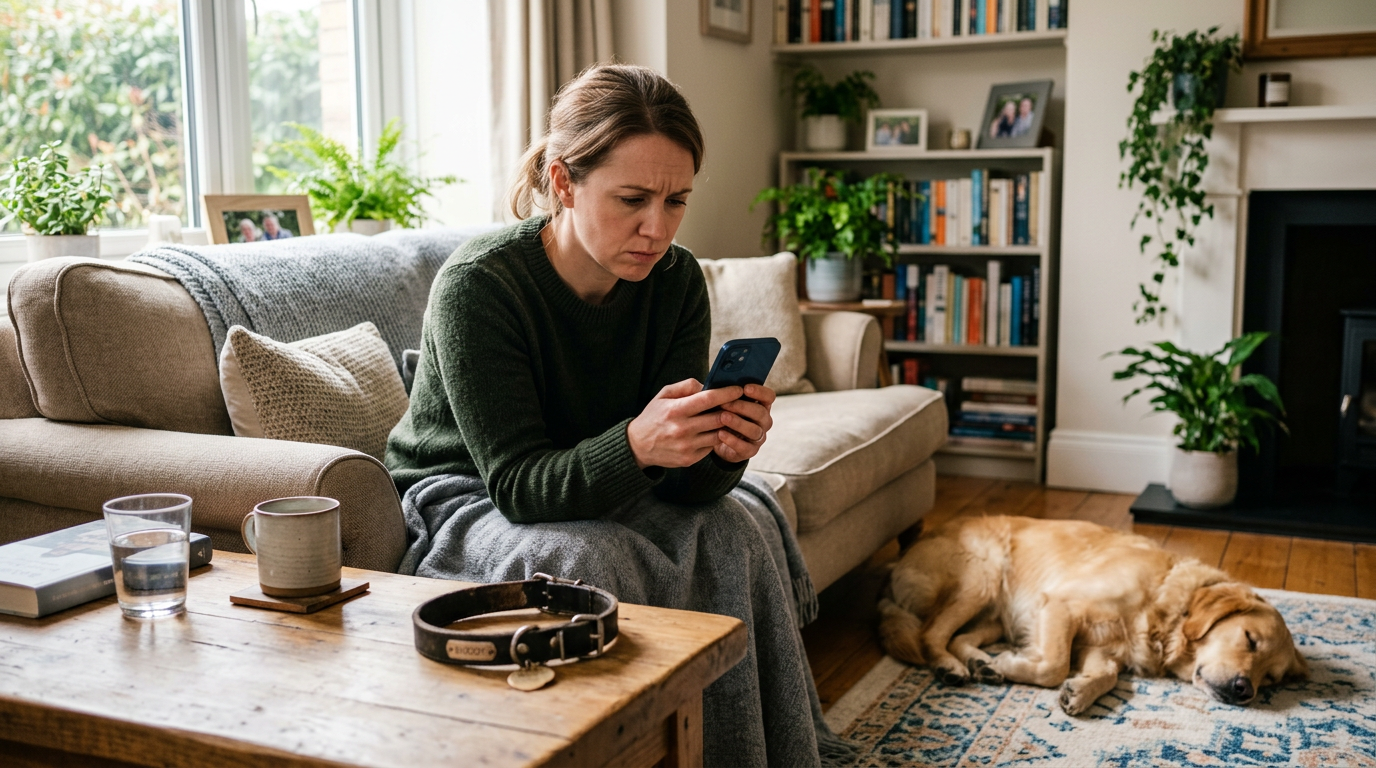
This isn't about one being "better" than the other in every way. Engraved tags are simple, durable, and don't need a battery or a phone to read. They've worked for decades.
But they have one fundamental flaw: they're frozen in time.
An engraved tag captures your life at the moment you ordered it. Every change after that - every move, every new phone number, every vet switch - makes the tag a little less accurate. And updating it means ordering a new tag, waiting for it to arrive, and remembering to swap it onto the collar. It costs money, it takes time, and honestly, most people just don't bother.
A digital profile - whether it's on an NFC tag, a QR code, or a smart tag platform - is fundamentally different because updating it is trivial. You open the app, change the phone number, hit save. Done. Thirty seconds. Everyone in your household sees the change immediately. No new tag needed.
This is why we built FoundYa to work with any NFC chip. You don't need to buy a specific tag from us. Even a $2 NFC sticker from an online shop gives you a fully updatable digital profile. Stick it on the collar, link it to your pet's FoundYa profile, and you've got identification that stays current no matter how many times you move or change your number. Here's how it works.
The engraved tag can stay on the collar too. Belt and braces. But the digital profile is the one that'll have the right phone number when it matters.
How to keep it current
Knowing that stale info is a problem is the easy part. Actually keeping things updated is the habit you need to build.
Update on life changes
Make it a reflex. Every time one of these happens, update your pet's ID:
- You move house - collar tag (or accept it's out of date), microchip registry, digital profile
- New phone number - same three
- New vet - update the vet details on your microchip registry and digital profile
- New medication - update your digital profile (engraved tags can't capture this anyway)
- New emergency contact - update your microchip registry and digital profile
- New household member or pet sitter - add them on your digital profile platform
Set a recurring reminder
Even if you reckon nothing's changed, check everything every six months. Things slip through the cracks. Your partner changed their number and forgot to tell you. Your vet moved locations. Your emergency contact got a new email address.
A six-month reminder takes two minutes to act on and could be the difference between a quick reunion and a week of searching.
Make it a household task
If you're using a platform that supports household access, make sure your partner or housemate can update the profile too. The person who notices the vet's new address might not be the person who originally set up the tag. Give everyone the ability to keep things current.
FoundYa's household feature means anyone you've added can update your pet's profile. So when your partner takes the dog to a new vet, they can update the vet details right there in the waiting room. No "remind me to update the tag later" that never happens.
Your pet's ID should be as current as your pet
Your pet isn't the same animal they were when you first got the tag. They've changed vets, changed medications, maybe changed homes. Your life has moved on too - new numbers, new addresses, new people around you.
Their identification should reflect all of that. Not the snapshot from two years ago when you stood at the pet shop kiosk and picked a font for the engraving.
Take five minutes today to audit what's on your pet's profile. And if you're still relying solely on an engraved tag, try designing a digital one in our Tag Designer - it takes a minute, works with any NFC chip, and means you'll never have to wonder whether the phone number on the collar is still right.