Lost Cat? Here's What Actually Works
Your cat didn't come home last night. Or your indoor cat bolted through an open door and vanished. Either way, the silence is awful - no meowing at the back door, no warm weight on the bed at 3 am. You're worried. That's fair.
But here's the thing most people get wrong: cats are not lost dogs. Almost everything you've heard about finding a lost pet assumes it's a dog. Dogs run. Dogs cover distance. Dogs approach strangers. Cats do none of those things - and if you search for your cat the way you'd search for a dog, you'll probably walk right past them.
This guide is specifically for cats, because they deserve their own playbook.
Cats hide - they don't run
When a dog escapes, it tends to move. It follows scents, chases things, covers ground. A lost dog might be several kilometres away within hours.
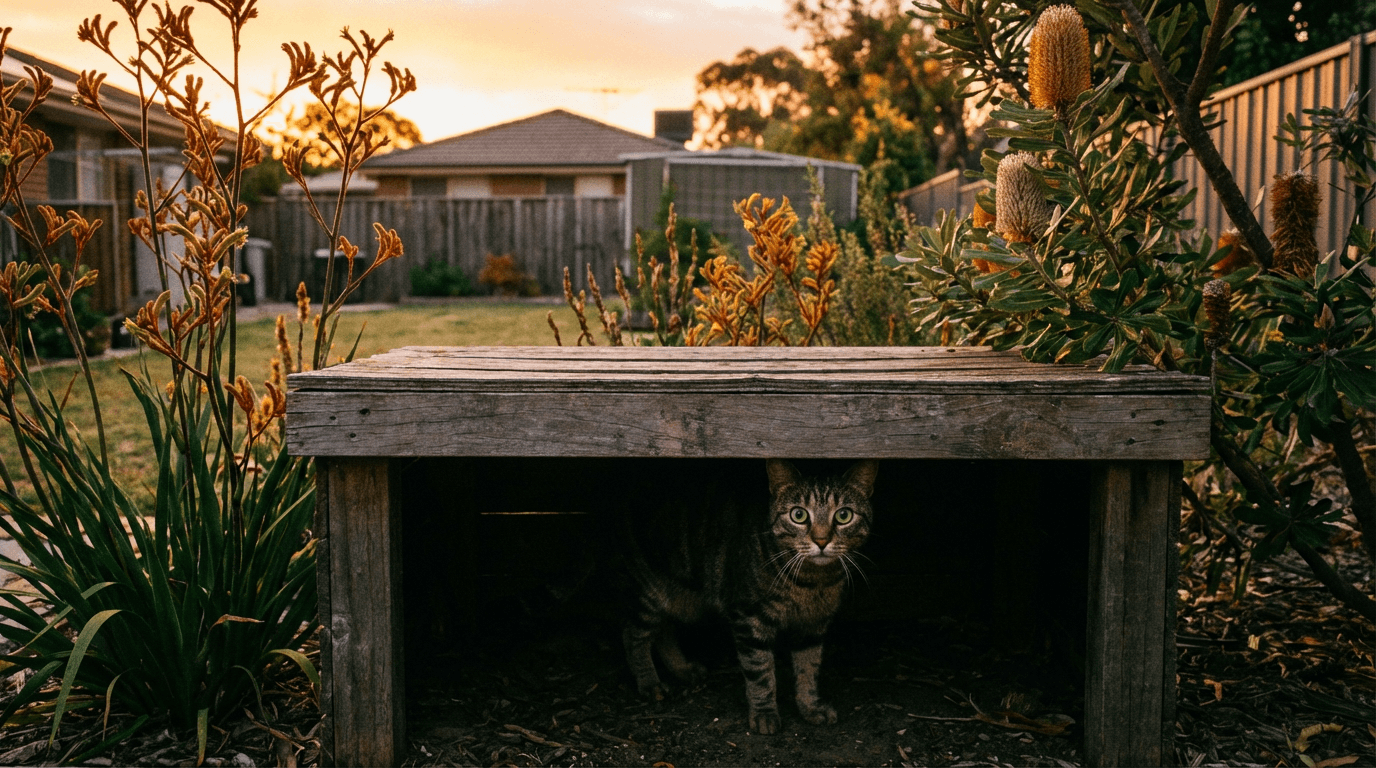
Cats are the opposite. When a cat is scared or disoriented, its instinct is to find the nearest hiding spot and stay completely still. They won't meow. They won't come when you call. They'll sit silently under a deck or inside a bush for days, waiting for things to feel safe again.
This is especially true for indoor cats that escape. An indoor cat that gets outside is overwhelmed by the sights, sounds, and smells. They typically freeze within the first few metres and find somewhere to wedge themselves in. Studies on displaced cats have found that the vast majority of indoor cats are recovered within a 50-metre radius of their home.
Read that again. Fifty metres. Your cat is almost certainly closer than you think.
If you've also got a dog, we wrote a separate guide on finding a lost dog. The strategies are genuinely different - dogs need a wide search, cats need a close, thorough one.
Outdoor cats that go missing are a slightly different story. They know the neighbourhood and have a wider comfort zone. But even outdoor cats that get spooked - by a new dog, a car, fireworks - tend to hunker down rather than travel far. They're hiding, not lost.
The first 24 hours
Speed matters, but thoroughness matters more. Resist the urge to drive around the neighbourhood calling their name. Instead, search slowly, quietly, and very close to home.
Search your own house first
This sounds ridiculous, but do it. Cats hide in places you wouldn't believe - inside recliners, behind washing machines, on top of kitchen cabinets, inside drawers that were left open for five seconds, inside the box spring of a bed. Check every room, every cupboard, every gap. Use a torch and look under and behind everything.
More than a few "lost" cats have been asleep on top of the hot water heater the whole time.
Search within 50 metres
Once you've cleared the house, go outside and search within a 50-metre radius. That's roughly five houses in every direction. Focus on:
- Under decks and verandahs - the number one hiding spot
- Inside sheds and garages - especially if a neighbour had theirs open recently
- Dense bushes and garden beds - cats wedge themselves into thick foliage
- Under cars - including up inside the engine bay
- Behind bins and wheelie bins
- Inside any open structure - pool pump covers, meter boxes, compost bins

Move slowly and quietly. Get low - cat-height low. Bring a torch even during the day, because you're looking into dark spaces. Talk softly or make a gentle "psst psst" sound rather than calling loudly. A scared cat won't respond to shouting.
Search at dusk and dawn
Cats are crepuscular - most active at dawn and dusk. If you didn't find them during the day, go out again in the early morning and just before dark. Sit quietly near likely hiding spots and listen. You might hear a faint meow that you'd miss during the noise of daytime.
Take your search out at 5 am before traffic noise starts. The stillness of early morning is when you're most likely to hear a scared cat vocalise for the first time.
Luring them home
You can't chase a cat into coming home. But you can make home irresistible.
The litter box trick
Put your cat's used litter box outside near the door they normally use. Cats can smell their own litter from remarkable distances, and it signals "home" in a way nothing else does. This is genuinely one of the most effective things you can do.
Familiar scents
Place a worn piece of your clothing near the door - a t-shirt you've slept in works well. Add your cat's bed or blanket. The goal is to create a scent trail that says "safe" to a scared cat creeping around at 2 am.
Strong-smelling food
Put out food with a powerful aroma - tuna, sardines, or warmed wet cat food. The warmth releases more scent. Place it near your door in the evening and check it before dawn.
Leave a way in
If it's safe to do so, leave a window cracked or a door slightly open overnight with the lights off. Many cats come home under the cover of darkness when the neighbourhood is quiet and still. A cat flap left unlocked is ideal if you have one.
The longer search
If a few days pass and your cat hasn't turned up, don't lose hope. Cats have been found weeks and even months after going missing, often very close to where they disappeared.
Lost-pet groups and flyers
Post in local Facebook lost-pet groups with a clear, recent photo. Physical flyers at vet clinics, pet shops, and local noticeboards still work - a surprising number of cats are found because someone saw a flyer at their vet and recognised the cat that's been hanging around their yard.
Humane traps
Contact your local council or a rescue organisation about borrowing a humane trap. If your cat is too scared to approach you but is in a known area, a baited trap is often the safest way to recover them. Most councils will lend them out for free.
FoundYa's lost mode and Sentinels
If your cat has a FoundYa profile, activating lost mode sends a geo-targeted alert to nearby Sentinels - community members who've opted in to help find missing pets. Think of it as a digital neighbourhood watch for pets. Sentinels in your area get notified to check their yards, sheds, and under their decks - exactly the places a hiding cat would be.
Even without a physical tag on the collar, lost mode gives you Sentinel alerts and a shareable profile link with your cat's photo, name, and a way to contact you. Anyone who spots your cat can reach you without friction - no app needed on their end.
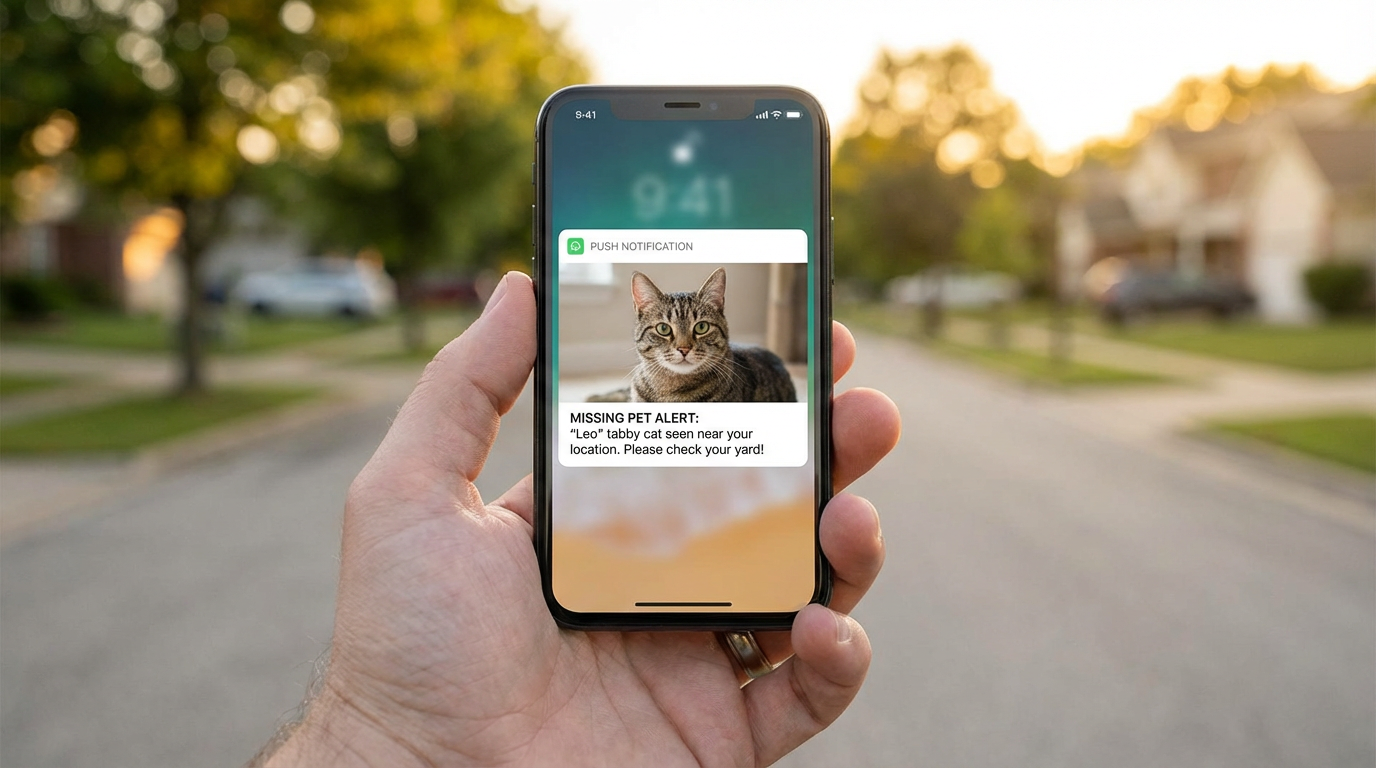
You don't need a FoundYa tag to use lost mode and Sentinels. Sign up, create your cat's profile, and those tools are ready whenever you need them. When you add a physical NFC tag later, any finder can tap and see the profile instantly.
Indoor cats that escape - a special case
Indoor cats that get outside are in a category of their own. They don't have the street smarts of an outdoor cat. They're overwhelmed, terrified, and operating on pure instinct - which means hide, freeze, stay silent.
The single most important thing to remember: do not chase them. If you spot your indoor cat outside, resist every urge to run toward them. A scared indoor cat will bolt further, and you'll lose sight of them. Instead, sit down, talk softly, and let them come to you. If they won't approach, note where they are and set up a lure (food, litter box) nearby. Come back at dusk.
Indoor cats that escape are almost always within a house or two of home. Search close, search low, and search quietly. They're waiting for it to feel safe enough to move.
Set up their safety net now
The best time to prepare for a lost cat is while they're asleep on your lap. A few minutes today can save you days of searching later:
- Create a FoundYa profile with a current photo, your contact details, and any medical needs
- Add an NFC tag to their collar - even a $2 sticker works. If someone finds your cat, one tap gives them everything they need to reach you
- Update your microchip details - if you've moved or changed numbers, your chip might as well not exist
- Take a clear side-on photo today - shelters use lateral photos to match found animals
Cats are masters of hiding, but they're also creatures of routine and territory. They want to come home. Give them every possible way to get there - and give anyone who finds them a zero-friction path to reaching you.
Sign up to FoundYa and set up your cat's profile now. It takes two minutes, and you'll have lost mode, Sentinels, and a shareable profile link ready the moment you need them.